The DGNB System (Deutsche Gesellschaft für Nachhaltiges Bauen e. V., German Sustainable Building Council) represents the global benchmark for excellence in sustainable buildings. Developed in 2008, it has continuously evolved to address the complex challenges of the modern built environment. Unlike traditional systems that may focus solely on environmental impact, the DGNB system adopts a holistic perspective, ensuring that buildings are ecologically sound, economically viable, and socially responsible.
An Integrated Sustainability Framework
At the core of the DGNB certification is the belief that sustainability is multifaceted. The system moves away from simple checklists and instead focuses on the entire life cycle of a project.
- Life Cycle Assessment (LCA): Evaluates the environmental impact of a building from raw material extraction to demolition.
- Life Cycle Costing (LCC): Analyzes the total cost of ownership, helping owners understand long-term financial performance.
- Sustainable Development Goals (SDGs): Integrates the United Nations’ global objectives for a better future.
- International Adaptability: The criteria are designed to be flexible, allowing for local adjustments based on regional climate, regulations, and building traditions.
The Six Quality Fields of Sustainability
The evaluation process is structured around six distinct quality fields. Each project is assessed based on its performance across these categories:
| Description & Key Aspects | |
|---|---|
| Ecological Quality | Focuses on resource conservation and environmental protection. Key aspects include CO2 emission reduction and biodiversity. |
| Economic Quality | Prioritizes long-term value and cost-efficiency. Key aspects include lifecycle cost optimization and building flexibility. |
| Sociocultural & Functional Quality | Centers on the human experience. Key aspects include indoor air quality, thermal comfort, and accessibility. |
| Technical Quality | Evaluates the robustness and efficiency of technical systems, fire protection, and ease of maintenance. |
| Process Quality | Assesses the planning and construction management phases to ensure sustainability goals are met. |
| Site Quality | Examines the impact of the location, including transport connectivity and integration with the surrounding neighborhood. |
Certification Performance Levels
The DGNB certification level is determined by the project’s total performance index achieved across all assessment criteria:
- Platinum: Total performance index of 80% or higher.
- Gold: Total performance index of 65% or higher.
- Silver: Total performance index of 50% or higher.
- Bronze: Total performance index of 35% or higher (primarily for existing buildings).
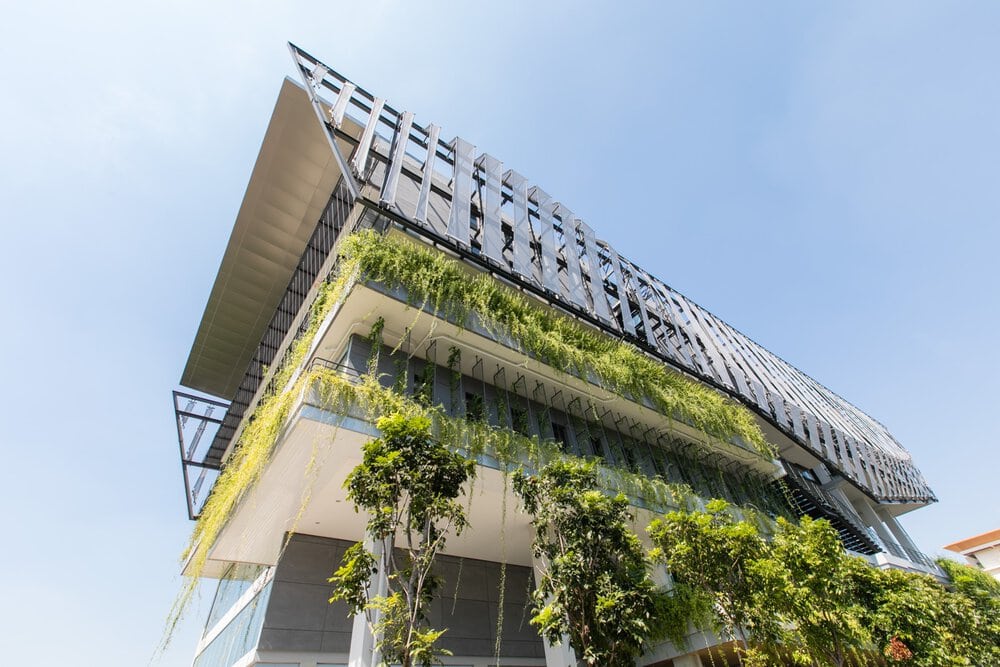
DGNB certification goes beyond a conventional sustainability label, serving as a strategic framework for sustainable building management. With a strong emphasis on measurable performance, lifecycle efficiency and long-term value creation, the certification enables developers, owners and occupants to deliver future-ready buildings with lasting environmental, economic and social impact.

 English
 ไทย
ไทย