Ensuring Building Operations as Intended
Building commissioning is a quality management process that verifies that the technical systems and the building envelope of a new building are operating in accordance with the Owner’s Project Requirements (OPR) and Basis of Design (BOD).
Commissioning should begin at the start of a new building project, before design. At regular intervals, the design and construction of the project will be checked to ensure the building’s startup is a structured process, despite the hectic final weeks of a construction project. The result is a building that works as intended, with low energy consumption, great thermal comfort, and low maintenance costs.
EGS-plan provides testing and building commissioning services for DGNB, LEED, and TREES certification:
- Fundamental Commissioning FCx
- Enhanced Commissioning ECx
- Monitoring Based Commissioning MBCx
- Fassade Commissioning BECx
What Is Building Commissioning?
Building commissioning (Cx) is a systematic quality management process that verifies a building’s technical systems and envelope are designed, installed, tested, and documented to meet the Owner’s Project Requirements (OPR) and the Basis of Design (BOD).
Commissioning is an independent process; it is not the same as general construction inspection. It is typically led by a Commissioning Authority (CxA) who is not part of the design or construction team. The CxA reviews design documents, observes construction, develops functional test procedures, executes those tests on installed systems, and documents the results. The goal is simple: confirm that what was specified in the design is what actually got built and that it works.
For new building commissioning, the process starts at the pre-design phase, before the first drawing is produced, and continues through design, construction, functional testing, and handover. For existing buildings, commissioning (often called retro-commissioning or RCx) evaluates operational systems against their intended performance and identifies where things have drifted.
Building commissioning covers energy-related systems by default, from HVAC to lighting and domestic hot water, but the scope can extend to the building envelope, electrical systems, plumbing, fire protection, and building management systems (BMS), depending on the project’s needs and certification requirements.
Research by Lawrence Berkeley National Laboratory found that commissioned buildings can save 13–16% in whole-building energy costs compared to non-commissioned buildings, with some projects exceeding 25% savings. New building commissioning typically pays for itself within 4–5 years through reduced energy use, fewer warranty calls, and lower maintenance costs.
Why Commission Your Building?
Building commissioning produces measurable outcomes that affect your operating costs, your tenants’ experience, and your ability to meet certification and regulatory requirements.
Catch System Errors Before Handover
Most building systems involve coordination across multiple trades, including mechanical, electrical, controls, and plumbing. Installation errors, specification mismatches, and control sequence conflicts are far cheaper to fix during construction than after the building is occupied. New building commissioning identifies these problems systematically through design reviews, site inspections, and functional performance testing.
Reduce Energy Consumption and Operating Costs
A properly commissioned building uses less energy because its systems are actually working as designed. In Thailand’s climate, where cooling loads dominate building energy use, making sure your chiller plant, air handling units, and controls are optimized from day one has an outsized impact on electricity bills.
Meet LEED, TREES, and DGNB Certification Requirements
Commissioning is a prerequisite for most green building certifications. LEED requires Fundamental Commissioning (EAp1) for every BD+C project, with Enhanced Commissioning (EAc1) earning additional credits. TREES requires commissioning under its Building Management category. DGNB evaluates commissioning as part of its process quality assessment. If your project is pursuing any of these certifications, EGS-plan delivers both building commissioning and certification consulting services.
Structured Handover for Operations Teams
New building commissioning produces clear documentation, including functional performance test reports, equipment checklists, system operating manuals, and training materials. This gives your facility management team the information they need to operate and maintain building systems correctly from day one. For complex buildings with BMS, VRF systems, district cooling, or integrated renewable energy, this handover documentation is particularly valuable.
Our Building Commissioning Services
EGS-plan provides four types of building commissioning, each suited to different project needs and certification requirements.
Fundamental Commissioning (FCx)
Fundamental Commissioning is the baseline commissioning scope to verify that your building’s core systems are installed and operating as intended. It is a mandatory prerequisite for both LEED certification (EAp1: Fundamental Commissioning and Verification) and TREES certification (under the Building Management category).
FCx covers energy-related systems: HVAC (chillers, air handling units, fan coil units, VRF systems), controls and building management systems, lighting controls, and domestic hot water. The process starts at the pre-design phase with the development of the Owner’s Project Requirements (OPR) and the Commissioning Plan, continues through design review and construction observation, and culminates in functional performance testing of all commissioned systems before handover.
Enhanced Commissioning (ECx)
Enhanced Commissioning goes beyond the fundamental scope. It adds an independent Commissioning Authority (CxA) review of design documents and contractor submittals, a more rigorous construction observation protocol, and a post-occupancy verification visit approximately 10 months after handover to confirm that systems continue to perform correctly under real operating conditions.
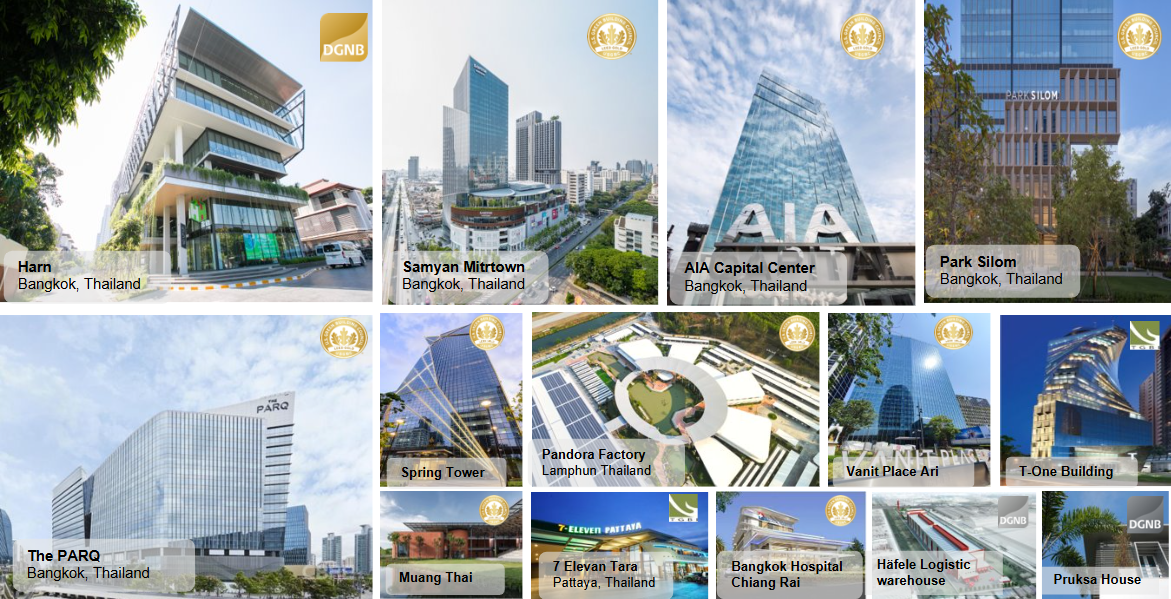
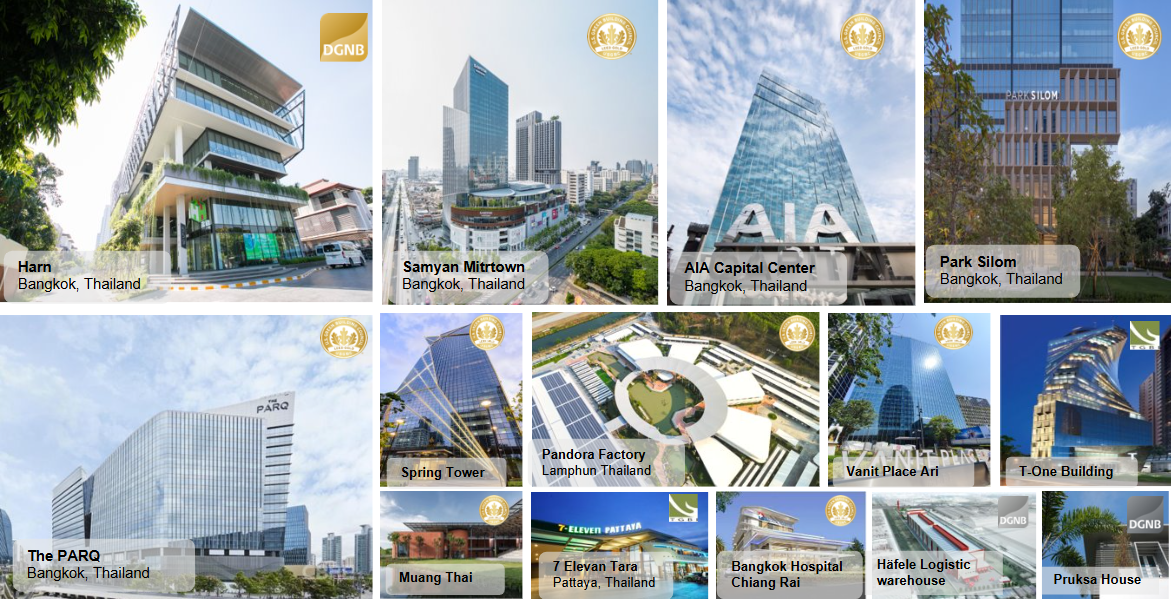
ECx earns additional LEED credits (EAc1: Enhanced Commissioning) and is recommended for complex or high-performance buildings where the cost of post-handover problems is high. For projects targeting LEED Gold or Platinum, ECx is typically part of the credit strategy. EGS-plan has delivered FCx and ECx together on projects including Park Silom, S-Oasis, KIS Reception Building, and InterContinental Chiang Mai.
Monitoring-Based Commissioning (MBCx)
Monitoring-Based Commissioning uses continuous data collection from the building management system (BMS) or other data-logging technology to track system performance over time. Rather than relying solely on spot measurements during functional testing, MBCx provides ongoing visibility into how systems are performing under real load conditions and flags performance degradation before it becomes a costly problem.
MBCx is particularly valuable for buildings pursuing LEED O+M credits, for owners with portfolio-wide energy reduction targets, and for facilities where energy costs are a significant line item (such as hospitals, data centers, and large commercial buildings). EGS-plan has delivered MBCx on projects including Park Silom and The PARQ in Bangkok, where continuous monitoring supplemented the fundamental commissioning scope.
Building Envelope Commissioning (BECx)
Building envelope commissioning targets the systems that separate the inside from the outside, such as the facade, roof, windows, curtain walls, waterproofing membranes, cladding joints, and sealant systems. These are the elements most likely to cause energy loss, moisture ingress, condensation, and thermal comfort failures if not properly installed and tested.
BECx involves design review of envelope details, field inspection of installation quality, and testing of critical assemblies (water penetration testing, air leakage testing, and thermal imaging). In Thailand’s tropical climate, where heat gain through the envelope drives a large share of cooling load, building envelope commissioning has a direct impact on both energy performance and occupant comfort.
BECx is not yet a standard prerequisite for most green building certifications, but it is increasingly recognized as a high-value commissioning scope for buildings with complex curtain wall systems, high-performance facades, or aggressive energy targets.
 Commissioning for LEED Certification
LEED commissioning requirements are structured across three levels, each building on the previous one:
Fundamental Commissioning and Verification (EAp1) is a mandatory prerequisite for every LEED BD+C project. The scope covers energy-related systems and requires the CxA to develop the OPR, review the BOD, conduct commissioning activities during construction, and complete functional performance testing before handover.
Enhanced Commissioning (EAc1) earns additional LEED credits and is typically pursued by projects targeting Gold or Platinum. It requires the CxA to review design documents and contractor submittals, and to conduct a post-occupancy verification visit approximately 10 months after handover. Importantly, the CxA for Enhanced Commissioning must be independent of the design team.
Monitoring-Based Commissioning (EAc2) provides ongoing performance-monitoring credits for projects that implement continuous data collection and analysis. This is relevant for LEED BD+C projects seeking maximum Energy and Atmosphere credits and for LEED O+M projects where operational performance is the core focus.
EGS-plan serves as the independent LEED Commissioning Authority (CxA) across all three levels. Because we also consult on LEED certification, the commissioning documentation we produce is already structured to meet GBCI’s review requirements.
 Commissioning for TREES Certification
Under the TREES Building Management (BM) category, commissioning is a prerequisite, as every TREES-NC and TREES-CS project must include it. The TREES commissioning scope includes verifying that building systems are designed and constructed as specified in the credits submitted for evaluation. TGBI requires that the commissioning authority confirm compliance with the project’s green building commitments.
TREES commissioning also requires ongoing building management evaluation to confirm that certified buildings maintain their green status during operation. For projects transitioning from TREES-NC/CS to TREES-EB (Existing Building), the commissioning documentation produced during the original certification provides the operational baseline.
EGS-plan provides TREES commissioning and TREES certification consulting under the same team. This dual capability means the commissioning scope is designed around the specific credits your project is pursuing, and the documentation produced by our commissioning engineers is formatted to meet TGBI’s submission requirements.
The Building Commissioning Process — Phase by Phase
New building commissioning follows a structured sequence that runs parallel to the project’s design and construction timeline. Here is how each phase works:
Pre-Design Phase
The Commissioning Authority (CxA) is appointed, and the commissioning scope is established. The CxA works with the owner to develop the Owner’s Project Requirements (OPR), the document that defines what the building is supposed to do. The CxA also produces the Commissioning Plan, which outlines the scope, schedule, roles, and responsibilities for all commissioning activities.
Appointing the CxA before design starts allows the building commissioning scope to influence design decisions, catches coordination issues early, and protects the commissioning budget from being squeezed by late-stage construction costs.
Design Phase
The CxA reviews the design documents and Basis of Design (BOD) to confirm that the proposed systems are designed to meet the OPR. This includes reviewing MEP drawings, control sequences, equipment specifications, and energy model assumptions. The CxA conducts design review workshops with the design team and flags any gaps or conflicts between the OPR and the proposed design.
Construction Phase
During construction, the CxA reviews contractor submittals, develops inspection checklists for commissioned systems, conducts site visits to observe installation quality, and monitors compliance with the OPR and BOD. The focus is on catching installation errors, coordination gaps, and specification mismatches.
Functional Testing and Handover
The CxA also provides testing and commissioning services by developing functional performance test procedures for each commissioned system, executing the tests with contractors present, documenting the results, and producing the commissioning report. Functional tests verify that systems operate correctly across all expected modes — full load, part load, seasonal conditions, emergency scenarios, and failure modes.
The CxA also produces the Systems Manual and training materials for the facility management team and conducts hands-on training sessions to ensure operations staff can run the building’s systems competently from day one.
Post-Occupancy Verification (ECx)
For Enhanced Commissioning, the CxA returns to the building approximately 10 months after handover to verify that systems continue to perform correctly under real operating conditions. This revisit addresses the inevitable adjustments that arise once a building is fully occupied — seasonal load changes, occupant behavior patterns, control sequence fine-tuning, and any emerging deficiencies that were not apparent during initial functional testing.
Commissioning Projects by EGS-plan
EGS-plan has served as the Commissioning Authority (CxA), providing commissioning and testing services for projects across every major building type in Thailand, from offices and hospitals to factories, hotels, commercial interiors, and institutional buildings. Here is a selection of our commissioned projects:
Park Silom Office Tower, Bangkok
LEED v4 BD+C: Core and Shell — Gold | FCx + ECx + MBCx
A 39-story office tower with 79,575 m² gross floor area. EGS-plan provided Fundamental, Enhanced, and Monitoring-Based Commissioning services. Developed by NYE and RGP Development Company Limited.
S-Oasis by Singha Estate, Bangkok
LEED v4 BD+C: Core and Shell — Gold | FCx + ECx
A 35-story office complex with 71,617 m² gross floor area, located next to Chatuchak Park MRT station. EGS-plan served as the LEED Commissioning Authority.
O-NES Tower, Bangkok
LEED Gold | FCx + ECx
A 29-story office tower with 62,500 m² gross floor area, featuring a VRV water-cooled air conditioning system and hybrid steel-and-RC structure. EGS-plan provided LEED commissioning services.
InterContinental Chiang Mai The Mae Ping
LEED v4 BD+C: Hospitality — Gold | FCx + ECx
A heritage hotel in Chiang Mai’s Chang Klan area. First hotel in Chiang Mai to receive LEED Gold certification (65 points). EGS-plan provided Fundamental and Enhanced Commissioning for the LEED certification process.
The PARQ, Bangkok
LEED Certification | FCx + MBCx
A 16-story mixed-use office building with approximately 134,000 m² gross floor area in central Bangkok. EGS-plan provided Fundamental and Monitoring-Based Commissioning alongside the project’s WELL certification.
Why Choose EGS-plan for Building Commissioning?
More than 1,000,000 m² commissioned in Thailand. Our portfolio spans offices, hospitals, factories, hotels, and commercial interiors across LEED, TREES, and DGNB-certified projects. When you bring us a project, we’ve likely commissioned something similar before.
Commissioning and certification under one roof. Most green building certification systems require new building commissioning. At EGS-plan, our commissioning engineers and certification consultants work from the same office, on the same timeline, with the same documentation.
Independent CxA capability. For LEED Enhanced Commissioning, the CxA must be independent of the design team. EGS-plan operates as an independent Commissioning Authority. That independence is what the certification requires, and it is what gives the commissioning findings their credibility.
Full-time engineering team. Every commissioning project is staffed by our in-house engineers, providing consistency for projects where commissioning activities span months or years from pre-design through post-occupancy verification.
German engineering heritage, Thai market expertise. EGS-plan (Bangkok) was founded in 2015 as a subsidiary of EGS-plan GmbH in Germany. We bring international building commissioning standards and methodology to every project, combined with practical knowledge of Thai construction practices, local equipment suppliers, and regional climate conditions.
Get started on your building commissioning and certification requirements. Contact EGS-plan to request a testing and commissioning services proposal.
Frequently Asked Questions About Building Commissioning in Thailand
A: Building commissioning (Cx) is a systematic quality management process that verifies a building’s technical systems, such as HVAC, controls, lighting, domestic hot water, and optionally the building envelope, are designed, installed, tested, and documented to meet the Owner’s Project Requirements (OPR) and the Basis of Design (BOD). The process runs from pre-design through handover, led by an independent Commissioning Authority (CxA). It is not a general construction inspection but a focused, documented verification that systems perform as intended.
A: Fundamental Commissioning (FCx) is the baseline scope: OPR development, design review, construction observation, and functional performance testing of energy-related systems. It is a mandatory prerequisite for both LEED (EAp1) and TREES certification. Enhanced Commissioning (ECx) adds an independent CxA review of design documents and contractor submittals, more rigorous construction observation, and a post-occupancy verification visit approximately 10 months after handover. ECx earns additional LEED credits (EAc1) and is typically pursued by projects targeting Gold or Platinum.
A: Yes. Fundamental Commissioning and Verification (EAp1) is a mandatory Energy and Atmosphere prerequisite for every LEED BD+C project. Enhanced Commissioning (EAc1) is an optional credit that earns additional points and is typically pursued by Gold and Platinum targets. Monitoring-Based Commissioning (EAc2) earns further credits for ongoing performance monitoring. EGS-plan serves as the independent LEED Commissioning Authority across all three levels.
A: Yes. TREES requires commissioning under the Building Management (BM) category; it is a prerequisite for every TREES-NC and TREES-CS project. The commissioning scope verifies that building systems are designed and constructed as specified in the TREES credit submissions. EGS-plan provides both TREES commissioning and TREES certification consulting under a single team.
A: Building envelope commissioning tests the components that separate the building interior from the exterior, such as facade systems, roof assemblies, windows, curtain walls, waterproofing membranes, cladding joints, and sealant systems. BECx involves design review of envelope details, field inspection of installation quality, and performance testing (water penetration testing, air leakage testing, thermal imaging). In Thailand’s tropical climate, where heat gain through the envelope accounts for a large portion of the cooling load, BECx has a direct impact on energy performance and occupant comfort.
A: Ideally at the pre-design phase, before the first design drawings are produced. Early CxA appointment allows the commissioning scope to influence design decisions, catches coordination issues between MEP systems before they are locked into the design, and protects the commissioning budget from being squeezed by late-stage construction costs.
A: The standard building commissioning scope covers energy-related systems: HVAC (chillers, air handling units, fan coil units, VRF systems), controls and building management systems (BMS), lighting controls, and domestic hot water. Enhanced and expanded scopes can include the building envelope (BECx), electrical systems, plumbing, fire protection, vertical transportation, and renewable energy systems. The exact scope depends on the project’s certification requirements, the building’s complexity, and the Owner’s Project Requirements.
A: Monitoring-Based Commissioning uses continuous data collection from the building management system (BMS) or other data-logging technology to track system performance over time. Rather than relying only on spot measurements during functional testing, MBCx provides ongoing visibility into how systems perform under real load conditions and flags performance degradation before it becomes costly. MBCx is relevant for LEED O+M credits, for LEED BD+C projects seeking maximum Energy and Atmosphere points, and for building owners with portfolio-wide energy reduction targets.
A: Yes, and that’s one of our key differentiators. EGS-plan delivers Fundamental, Enhanced, and Monitoring-Based Commissioning alongside LEED, TREES, and DGNB certification consulting. Having both services under one roof means the commissioning scope is designed around the specific credits your project is pursuing, the documentation formats align with certification body requirements, and there are no coordination gaps between the commissioning and certification teams.