 Developed by the International Finance Corporation (IFC), a member of the World Bank Group, EDGE, or Excellence in Design for Greater Efficiencies, measures how efficiently your building uses energy, water, and materials against a local baseline. As Thailand’s first EDGE-preferred service provider, EGS-plan handles both the EDGE Expert role, which advises on and designs sustainable features, and the EDGE Auditor role, which provides independent third-party verification under one roof.
What Is EDGE Certification?
EDGE is an innovative green building standard and software certification system. Unlike certification systems that rely on qualitative checklists, EDGE green building certification is fundamentally quantitative. The EDGE App models your building’s performance across three categories: energy consumption, water use, and embodied energy in materials, and compares it to a locally calibrated baseline. If your design achieves at least 20% savings in each category, it qualifies for certification.
EDGE building certification is administered by GBCI (Green Business Certification Inc.) in most countries. The system covers new construction, existing buildings, and major renovations. It applies to virtually every building type: offices, factories, warehouses, hotels, hospitals, residential developments, and retail spaces. And because IFC designed EDGE specifically for emerging markets, the certification process is faster and more affordable than many alternatives, without compromising credibility.
Why Get EDGE Certified?
A green building label only matters if it translates into real business outcomes. EDGE building certification does so across four areas that directly affect your bottom line and market position.
Reduce Operating Costs
To qualify for the base-level EDGE certification, your building must demonstrate at least 20% savings in energy, water and material consumption compared to the local standard. In practice, many of EGS-plan’s projects exceed that threshold. In fact, some of our projects in Thailand have achieved energy savings above 40%.
Those savings compound over the life of the building. Lower utility bills year after year make a meaningful difference to operating expenses, especially for large commercial, industrial, or hospitality properties where energy and water are among the highest recurring costs.
Access Green Financing
EDGE-certified buildings qualify for preferential loan terms from IFC-linked financial institutions and green bond programs. The certification is recognized by the International Capital Markets Association (ICMA) under its Green Bond Principles, by the Climate Bonds Initiative, and by GRESB, the global Environment, Social, and Governance (ESG) benchmark used by institutional real estate investors.
For developers seeking project financing or building owners looking to refinance, an EDGE certification can open the door to lower interest rates and broader pools of capital that are specifically earmarked for sustainable assets.
Strengthen Market Position
An internationally recognized green building label tells prospective tenants, buyers, and partners that your building meets a verified performance standard. In competitive real estate markets across Thailand and Southeast Asia, that distinction can be the difference between filling vacancies quickly and waiting.
EDGE certification is recognized in over 170 countries. Whether your tenants are multinational corporations with sustainability mandates or local businesses looking to reduce overhead, the label communicates credibility.
Meet ESG and CSR Goals
If your organization reports against ESG frameworks or has made public climate commitments, EDGE green building certification provides documented, third-party-verified proof of carbon and resource reduction.
The certification ties directly to measurable outcomes, such as specific percentage reductions in energy use, water consumption, and embodied carbon. This kind of evidence matters during due diligence, annual reporting, and investor communications.
EDGE Certification Levels
EDGE offers three tiers. Each level builds on the one below it, rewarding deeper commitments to resource efficiency and carbon reduction. Here is how the EDGE certification levels compare:
EDGE Certified
This is the entry-level tier. To qualify, a project must demonstrate at least 20% savings in energy, water, and embodied energy in materials compared to the local baseline. It is a strong starting point for projects that want to differentiate from conventional buildings without pursuing the deep efficiency measures required at higher levels. The EDGE Certified label does not expire and requires no renewal.
EDGE Advanced
EDGE Advanced significantly raises the energy bar. Projects at this level must achieve 40% or greater on-site energy savings while maintaining the 20% minimum for water and materials. Buildings that meet this threshold are automatically recognized as “Zero Carbon Ready”, a designation that signals they have the efficiency foundation needed to reach full carbon neutrality.
EDGE Advanced recognition is awarded at no additional cost beyond the standard certification fees. Like the EDGE Certified level, it does not expire.
EDGE Zero Carbon
This is the highest tier. To qualify, a building must first achieve EDGE Advanced certification, then demonstrate that 100% of its operational energy comes from renewable sources (on-site or off-site) or is offset through verified carbon credits. The building must also have been operational for at least one year with a minimum 75% occupancy rate.
Unlike the lower tiers, EDGE Zero Carbon requires periodic renewal every four years for projects using 100% renewables, or every two years for those relying on purchased carbon offsets.
Our EDGE Building Certification Services
EGS-plan is Thailand’s first EDGE-preferred service provider, appointed in May 2025. We provide both EDGE Expert and EDGE Auditor services within the same team, which simplifies coordination and keeps your project on schedule.
Our full-time engineers and architects work together from day one, so the technical recommendations you receive during design are already aligned with what the auditor will look for during verification.
Initial Assessment and Feasibility
As a Thailand-based EDGE certification consultant, we start by reviewing your building data, including floor plans, HVAC specifications, envelope details, water systems, and material selections. Using the EDGE App, we model your project’s current performance against the local Thai baseline and identify the most cost-effective path to your target certification level. You get a clear picture of where you stand and what it will take to close any gaps, before you commit resources.
Design Guidance and EDGE Software Support
Once the target is set, our team advises your architects and engineers on specific strategies for energy, water, and materials. We run scenarios in the EDGE App to compare options, such as rooftop solar vs. enhanced insulation vs. high-efficiency HVAC, for example, so you can make informed decisions based on performance impact and cost. We also handle all data entry and uploads within the EDGE software platform.
Documentation Preparation
EDGE green building certification requires supporting evidence for every claimed measure, including technical drawings, product specifications, commissioning reports, and more. Our team compiles, organizes, and reviews all required documentation to make sure nothing is missing or inconsistent before submission. Clean and complete submissions lead to faster reviews and fewer rounds of clarification.
Audit Coordination and Verification
Because EGS-plan provides both EDGE Expert and EDGE Auditor services, we coordinate the design audit and site audit internally. Our auditors verify that the as-built conditions match the design-stage claims, conduct the required on-site inspection, and submit the project to GBCI for their quality check. We manage any follow-up questions or clarification requests on your behalf.
Certification and Post-Certification Support
After your project passes the GBCI quality check, you receive your official EDGE certificate. But our support does not stop there. If you are considering an upgrade from EDGE Certified to EDGE Advanced, or from EDGE Advanced to EDGE Zero Carbon, we advise on the additional measures needed and manage the upgrade process. We also support teams pursuing EDGE Zero Carbon renewal.
EDGE Green Building Projects in Thailand
Our track record speaks for itself. Here are three EDGE green building projects in Thailand where EGS-plan served as both EDGE Expert and EDGE Auditor.
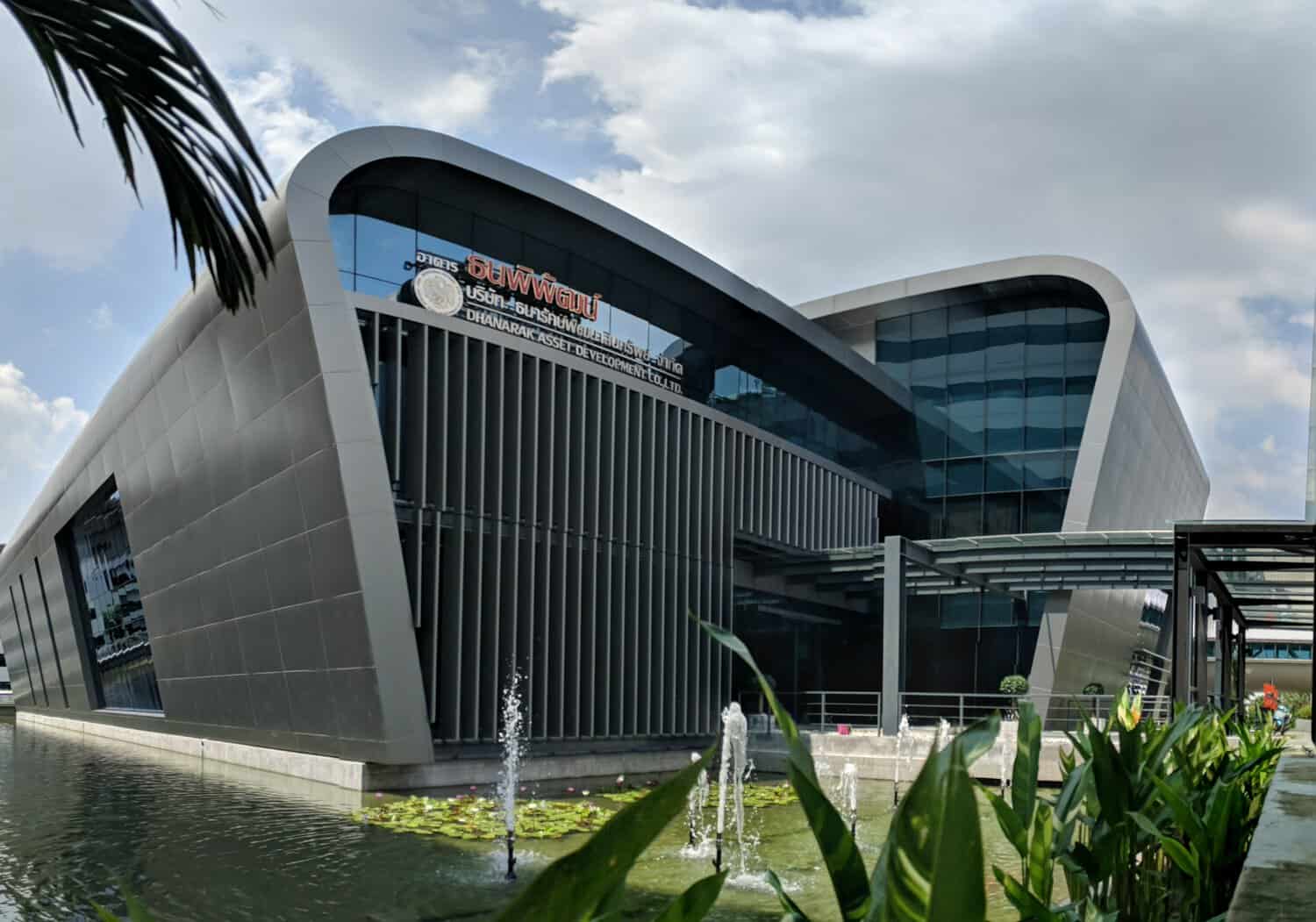
DAD Office Building, Bangkok
EDGE Advanced
The DAD (Dhanarak Asset Development) headquarters in Bangkok was originally designed and constructed to DGNB Platinum standards in 2018. When the building later pursued EDGE certification, it achieved EDGE Advanced with 48% energy savings, 58% water savings, and 26% embodied energy savings.
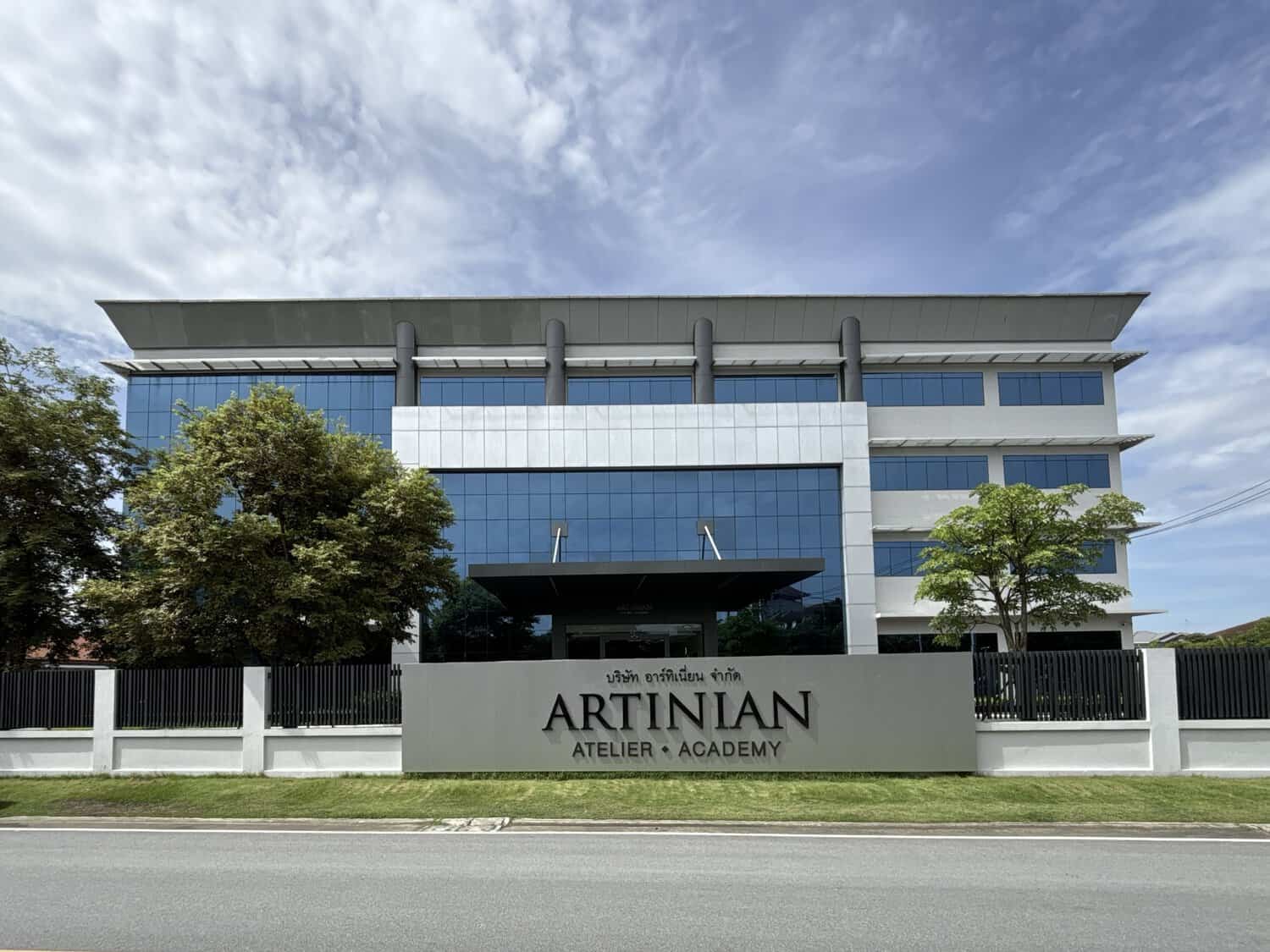
Artinian Atelier Academy, Bangkok
EDGE Advanced
Artinian Co. Ltd, a Bangkok-based luxury jewelry house, pursued EDGE Advanced certification for the complete refurbishment of its Atelier Academy building. The project achieved 100% energy savings (through a 660 kWp rooftop solar system combined with energy-efficient VRF air conditioning and ventilation with energy recovery), 35.8% water savings, and 82.5% embodied energy savings.
Habitat Mahidol, Chiang Mai
Preliminary EDGE Advanced
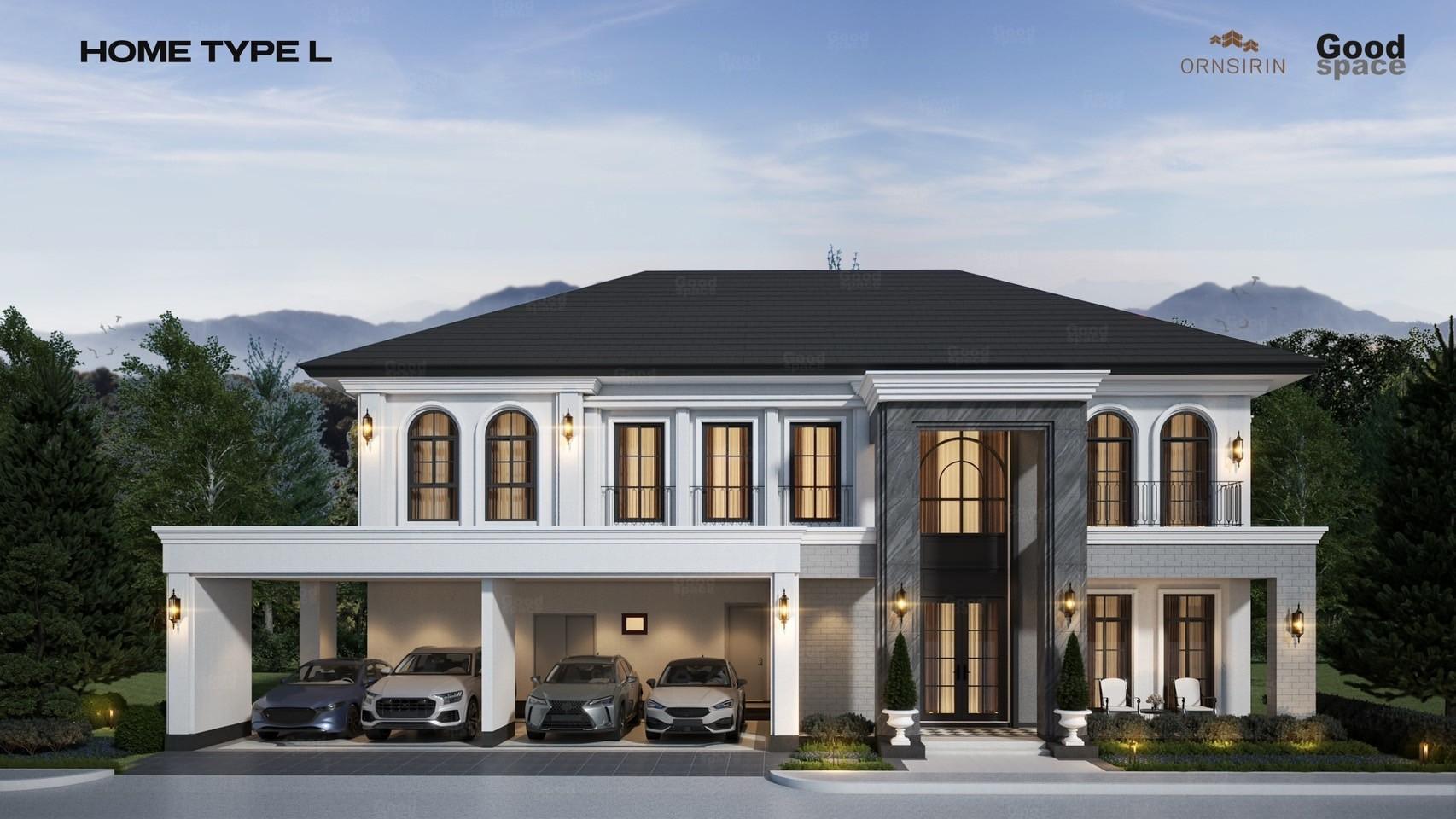
Developed by Ornsirin Holding Public Company Limited, Habitat Mahidol is a residential project comprising four single-family luxury homes in Chiang Mai. The project earned EDGE Advanced certification, achieving 44% energy savings, 36% water savings, and 42% embodied materials savings. Key measures include rooftop solar systems, enhanced roof insulation, and water-saving fixtures.
Dior Gold House, Bangkok
EDGE Advanced
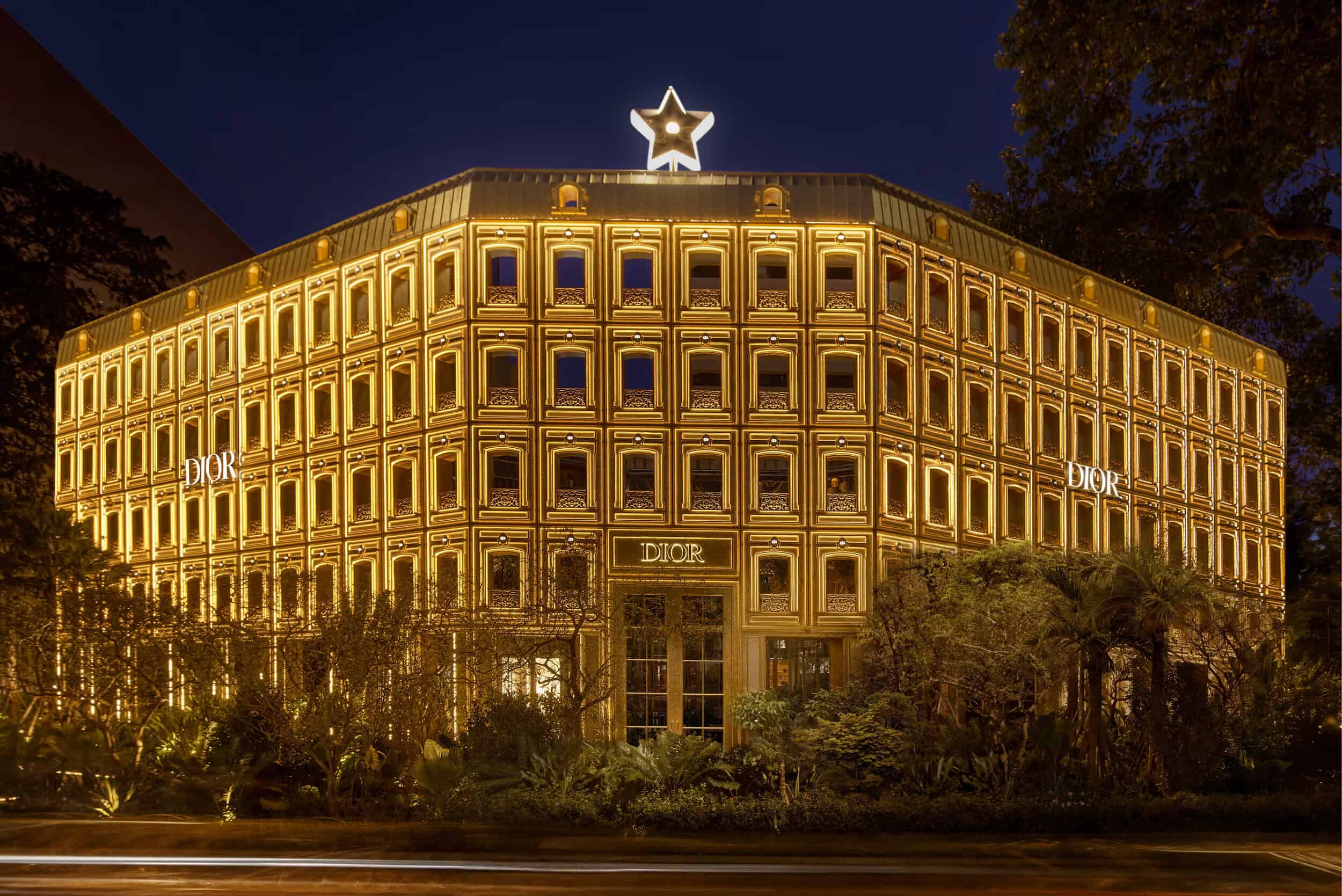
Christian Dior’s Gold House concept store on Phloen Chit Road earned EDGE Advanced certification in January 2026 with 49% energy savings, 45% water savings, and 38% embodied energy savings. This project set a new benchmark for sustainability in Thailand’s luxury retail sector, showing that world-class brand experience and resource efficiency go hand in hand.
Why Choose EGS-plan as Your EDGE Certification Consultant in Thailand?
EGS-plan (Bangkok) Co., Ltd. was founded in 2015 as a subsidiary of EGS-plan GmbH in Germany. Our Thai-German management team combines over a decade of experience in the Thai market with international engineering rigor. We have since completed more than 150 projects across Thailand, Southeast Asia, and beyond.
Architects and engineers under one roof. Unlike firms that outsource engineering or rely on freelancers, EGS-plan employs a full-time, multidisciplinary team. Our architects and engineers collaborate directly on every project, which means the sustainability strategies we recommend are technically sound and practically buildable.
Multi-certification experience. We hold credentials across DGNB, LEED, TREES, WELL, and EDGE. If your project needs more than one certification, or if you are weighing your options between systems, we can advise you on which path delivers the most value for your specific building type and goals.
Our approach starts with what delivers the best return and builds from there. Contact us to book a consultation appointment.
Frequently Asked Questions About EDGE Green Building Certification
A: EDGE (Excellence in Design for Greater Efficiencies) is an international green building certification system created by IFC, a member of the World Bank Group. It measures a building’s resource efficiency across three categories, energy, water, and embodied energy in materials, and certifies buildings that achieve at least 20% savings compared to a local baseline. The certification is recognized globally and is designed to be faster and more affordable than many other green building rating systems, making it particularly well-suited for emerging markets like Thailand.
A: There are three EDGE certification levels. EDGE Certified requires a minimum 20% savings in energy, water, and materials. EDGE Advanced requires 40% or greater energy savings (plus 20% in water and materials) and is recognized as “Zero Carbon Ready.” EDGE Zero Carbon requires EDGE Advanced performance plus 100% renewable energy supply or carbon offsets, with periodic renewal.
A: The primary difference is in the energy savings requirement. EDGE Certified requires at least 20% energy savings compared to the local baseline, while EDGE Advanced requires 40% or more. Both levels require 20% savings in water and embodied energy in materials. EDGE Advanced buildings are automatically designated as “Zero Carbon Ready.” There is no additional fee for the EDGE Advanced recognition, which is awarded automatically when the energy savings threshold is met.
A: EDGE certification is available for a wide range of building types, including offices, commercial spaces, factories, warehouses, hotels, hospitals, residential developments (single-family and multi-family), and retail buildings. Both new construction projects and existing buildings can pursue certification. Major renovations are also eligible. There is no minimum or maximum building size requirement.
A: EDGE certification costs include three components: a registration fee (currently $349 for projects outside India), certification fees based on your project’s built-up area (which vary by certifier), and EDGE Expert and Auditor consulting fees. The total cost depends on the size and complexity of your project. Contact EGS-plan for a project-specific estimate. Our team can outline the full cost picture, including certification body fees and our consulting services.
A: Timelines vary by project, but the GBCI quality check typically takes 10–15 business days after submission. The overall process, from initial EDGE modeling to receiving your certificate, depends on factors like design complexity, how quickly your team provides documentation, and whether you pursue Preliminary Certification (at the design stage) before Final Certification (post-construction). Projects with complete, well-prepared submissions can achieve Final EDGE Certification in as few as 15 business days after the site audit.
A: An EDGE Preferred Service Provider is a firm awarded by IFC and recognized by GBCI for meeting defined standards in EDGE Expert and EDGE Auditor capabilities. The designation signals that the firm has demonstrated proficiency in the EDGE certification process and the EDGE software platform. EGS-plan became Thailand’s first EDGE Preferred Service Provider in May 2025.
A: An EDGE Expert advises the project team on green design strategies, runs performance simulations in the EDGE App, and prepares documentation for submission. An EDGE Auditor independently verifies that the project meets the claimed performance standards, including conducting the required site audit and submitting the project to the certification body. At EGS-plan, we provide both services in-house, streamlining coordination and reducing the risk of miscommunication between the advisory and verification roles.
A: Yes. EDGE certification can be pursued alongside other rating systems such as LEED, DGNB, TREES, or WELL. In fact, some of EGS-plan’s projects hold multiple certifications. For example, the DAD Office Building in Bangkok achieved both DGNB Platinum and EDGE Advanced. If you are considering multiple certifications, our team can advise you on which combinations make sense for your building type and investment goals, and help you manage overlapping documentation requirements efficiently.