TREES (Thai’s Rating of Energy and Environmental Sustainability) is Thailand’s national green building rating system. Unlike international systems that require workarounds for tropical conditions or local construction practices, TREES green building certification was designed from the ground up for the Thai context. Its criteria reflect Thailand’s climate, energy codes, materials supply chain, and regulatory environment.
For developers working on government projects, TREES certification at Silver level or higher is mandatory. For private developers in Bangkok, TREES certification unlocks FAR (floor area ratio) bonuses of up to 20%, a direct financial incentive that can significantly increase a project’s buildable area. For any project that wants a recognized green credential within Thailand, TREES certification is the localized option.
EGS-plan has been working as a TREES certification consultant in Thailand since 2015. We provide consulting and commissioning services under one roof, from feasibility assessment through TGBI submission and review management. Our portfolio includes TREES Gold-certified projects and multiple Platinum-target projects currently in progress.
What Is TREES Certification?
TREES certification is Thailand’s own green building rating system, developed and administered by the Thai Green Building Institute (TGBI), an organization established jointly by the Engineering Institute of Thailand under Royal Patronage and the Association of Siamese Architects under Royal Patronage.
TGBI launched the TREES building certification in 2009 and formally established the system in 2012. The rating system was adapted from the LEED framework but recalibrated for Thai conditions. That means the energy baselines reference Thai building energy codes (not US standards), the materials credits recognize Thai Green Labels and Carbon Labels, the indoor environmental quality criteria account for tropical humidity and ventilation patterns, and the site and landscape credits address local transportation realities.
TREES building certification in Thailand uses a point-based system across eight assessment categories, with a total of 100 points available. Projects must meet all prerequisites first, then earn points from credit topics. The total score determines the certification level: Certified, Silver, Gold, or Platinum. Certification reviews are conducted by independent third-party assessors appointed by TGBI, and the institute issues the final certificate based on the assessment team’s decision.
The TREES certification system currently covers three main building types: TREES-NC (New Construction and Major Renovation), TREES-CS (Core and Shell), and TREES-EB (Existing Building: Operation and Maintenance). TGBI also offers PRE-NC, a pre-certification pathway that lets project teams validate their design direction before construction begins.
Why TREES? Key Advantages of TREES Certification in Thailand
TREES green building certification offers specific advantages for Thailand-based projects. Here are the four main ones:
Unlocks Bangkok Metropolitan Authority FAR Incentives
Under Bangkok’s Comprehensive Plan, buildings with TREES certification qualify for a floor area ratio (FAR) bonus, additional buildable floor area beyond the standard FAR limit for the project’s zone. The bonus scales with certification level: 5% for Certified, 10% for Silver, 15% for Gold, and 20% for Platinum.
In a city where land costs are high and FAR limits are strictly enforced, a 15–20% increase in buildable area can translate directly to additional revenue from leasable or saleable space. For large commercial and mixed-use projects in Bangkok, this incentive alone can offset the cost of pursuing TREES certification several times over.
Required for Key Government Projects
Thai government projects must achieve a minimum of TREES Silver certification as a regulatory requirement. If your project involves public sector or institutional clients, or if you are bidding on government-funded construction, TREES certification is a prerequisite. This requirement has made TREES the default certification path for government office buildings, public hospitals, university facilities, and institutional campuses across Thailand.
Designed for Thailand’s Climate and Market
TREES green building criteria are calibrated to tropical conditions and Thai construction workflows. The energy baselines reference Thai building energy regulations rather than ASHRAE standards developed for US climates. The materials credits recognize locally available products certified under Thailand’s Green Label and Carbon Label programs, and the indoor environmental quality requirements account for the realities of high-humidity environments.
Thai-Language Process With Local Certification Body
TGBI administers TREES certification entirely in Thailand, with documentation and review processes available in Thai, removing a language barrier that can add cost and complexity to internationally administered certifications. The review timeline is also locally managed, without the queue delays that can affect systems administered by certification bodies abroad.
TREES Certification Levels
TREES building certification uses a 100-point scale with four certification tiers. The more points your project earns, the higher the recognition and the greater the FAR bonus for Bangkok projects.
TREES Certified
Projects at this tier have met all TREES prerequisites and earned enough credit points to demonstrate green performance above the conventional baseline. In Bangkok, Certified-level projects qualify for a 5% FAR bonus.
TREES Silver
The mid-tier level and the minimum required for Thai government projects. Silver represents solid performance across all assessment categories and is the most common target for public sector and institutional projects. It grants a 10% Bangkok FAR bonus.
TREES Gold
A high-performance standard that signals a strong commitment to energy efficiency, water conservation, materials selection, and indoor quality. TREES Gold certification provides meaningful market differentiation for commercial buildings competing for quality tenants. Bangkok FAR bonus is 15%.
TREES Platinum
TREES Platinum, the highest tier, represents the top level of green building performance under the Thai national standard. It requires excellence across all eight assessment categories and is reserved for projects that go well beyond standard practice. Bangkok FAR bonus is 20%. EGS-plan is currently supporting multiple Platinum-target projects, including The Tara Chaengwattana and the Tantraphan Building in Chiang Mai.
TREES Rating Systems — Which Applies to Your Project?
TREES offers multiple pathways depending on your building type and project phase. Choosing the right one is one of the first decisions a TREES certification consultant helps you make.
| TREES Rating System | Applies To | When to Use |
|---|---|---|
| TREES-NC (New Construction and Major Renovation) | New buildings or buildings undergoing major renovation, where the project team controls the full scope of design and construction | The default path for most new projects. Covers all building systems from envelope to fit-out |
| TREES-CS (Core and Shell) | New buildings where the developer delivers the base building structure and core MEP systems, but not the full interior fit-out | Use when more than 40% of the floor area is incomplete at the time of certification, which is common for speculative office and mixed-use developments |
| TREES-EB (Existing Building: Operation and Maintenance) | Buildings that are already operational and occupied | Focuses on operational performance, maintenance practices, and ongoing resource management. Buildings with TREES-NC or TREES-CS certification can register for TREES-EB without the standard one-year operational waiting period |
| TREES PRE-NC (Pre-Certification) | Projects still in the design phase | A preliminary assessment that validates your design direction before construction begins. Not a full certification, but it confirms that the design is on track to achieve the target level, reducing the risk of costly redesign later |
TREES Certification Assessment Categories
TREES certification evaluates buildings across eight categories, each contributing points toward the total 100-point score. Here is what each category covers:
Building Management (BM): Project team organization, green building action plan, commissioning, and ongoing management practices. Commissioning is a prerequisite in this category.
Site and Landscape (SL): Site selection, transportation access, parking provision, stormwater management, heat island reduction, and landscaping.
Water Conservation (WC): Indoor and outdoor water use reduction, water metering, wastewater treatment, and water-efficient irrigation.
Energy and Atmosphere (EA): Building energy performance relative to Thai energy code baselines, HVAC efficiency, lighting efficiency, renewable energy, and refrigerant management. This is the highest-weighted category.
Materials and Resources (MR): Construction waste management, recycled content, locally sourced materials, and use of products certified under Thailand’s Green Label and Carbon Label programs.
Indoor Environmental Quality (IE): Indoor air quality, ventilation, thermal comfort, lighting quality, acoustic performance, and pollutant control. Credits in this category address the specific challenges of maintaining comfort in Thailand’s tropical climate.
Environmental Protection (EP): Measures to reduce the project’s impact on the surrounding environment, including pollution prevention and ecological conservation.
Green Innovation (GI): Innovative strategies that go beyond the standard credit requirements, rewarding projects that push the boundaries of sustainable practice.
Our TREES Certification Services
EGS-plan provides full-cycle TREES consulting from the first feasibility conversation through to your TGBI certificate. As a TREES green building consultant with in-house commissioning capability, we handle both documentation and technical verification under one team.
Feasibility Study and Credit Assessment
We start by evaluating your building data, design intent, and ownership targets. Using the TREES scorecard, we map a realistic path to your target certification level, identifying which credits are achievable within your budget, which ones require design changes, and which ones aren’t worth pursuing. For Bangkok projects, we also calculate the FAR bonus value at each certification tier so you can make an informed investment decision.
TGBI Registration and Pre-Certification Support
We handle your project’s registration with TGBI and assist with the PRE-NC pre-certification application if you want to validate your design direction early. PRE-NC is particularly valuable for large or complex projects where confirming credit compliance before construction reduces the risk of costly late-stage changes.
Design Stage Documentation
TREES-NC and TREES-CS assessments are divided into two submission phases: the design and construction stages. Our team guides your architects and engineers on credit compliance during the design phase, prepares and reviews all design-stage submission documents, and coordinates with TGBI reviewers to address any queries. Of the total 100 points, approximately 30 points are assessed at the design stage.
Construction Stage Documentation
During construction, we monitor on-site compliance with TREES certification requirements, including materials procurement, waste management, commissioning activities, and installation quality. We compile all construction-stage evidence, organize it for TGBI’s review format, and submit the final documentation package. The remaining approximately 21 points are assessed at the construction stage, with the balance determined across both phases.
Commissioning Support
Commissioning is a prerequisite under the TREES Building Management category. EGS-plan provides commissioning services in-house alongside our TREES consulting. Because the same team handles both the certification documentation and the commissioning process, there’s no coordination gap between what the TREES submission claims and what our commissioning engineers verify on site. We deliver fundamental commissioning as a baseline and can provide enhanced commissioning for projects targeting Gold or Platinum.
TGBI Submission and Review Management
We submit all documentation to TGBI, manage the review process, and handle any clarification requests or revision queries through to the final certificate award. Our team’s familiarity with TGBI’s review format and expectations, built over years of working on TREES projects in Thailand, helps keep the process efficient and avoids unnecessary back-and-forth.
EGS-plan’s TREES Certification Projects in Thailand
EGS-plan has supported TREES certification across commercial and office building types in Thailand. Here are projects where we served as both a TREES certification consultant and commissioning authority.
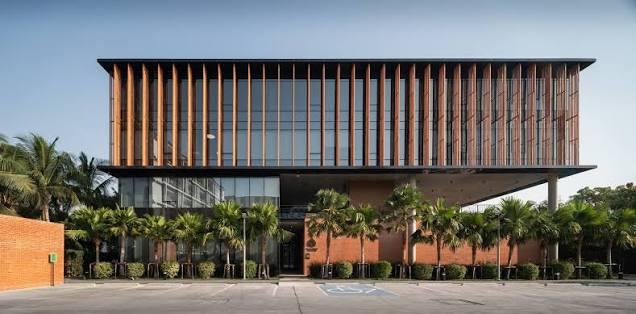
Tantraphan Building (Choice Corporate Park), Chiang Mai
Targets TREES Platinum
The Tantraphan Building is a 4-story office building with one basement and a gross floor area of 4,300 m², developed by Choice Property Co., Ltd. in Chiang Mai. EGS-plan provided building commissioning, certification consulting, and energy concept services for this project. The building targets TREES Platinum certification, and EGS-plan supported the project from 2019 through 2021.
Block 33 Plot A & Plot B, Bangkok
Targets TREES Gold
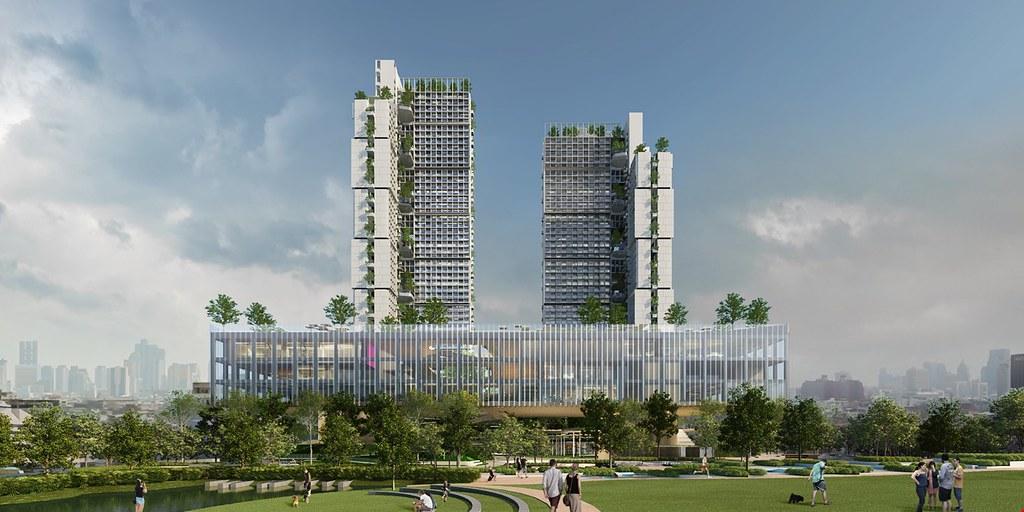
Block 33, Plot A & Plot B is a residential building development spanning 155,294 m² of gross floor area, developed by the Property Management of Chulalongkorn University. EGS-plan has provided TREES consulting services for this project since July 2020. The development is targeting TREES Gold certification by emphasizing eco-friendly materials, water conservation, and energy efficiency. Its sustainable design incorporates water-saving fixtures and energy-efficient HVAC systems to minimize the environmental footprint and promote a healthier living environment.
TH1 Bangna Data Center, Bangkok
Targets TREES NC Gold Certification
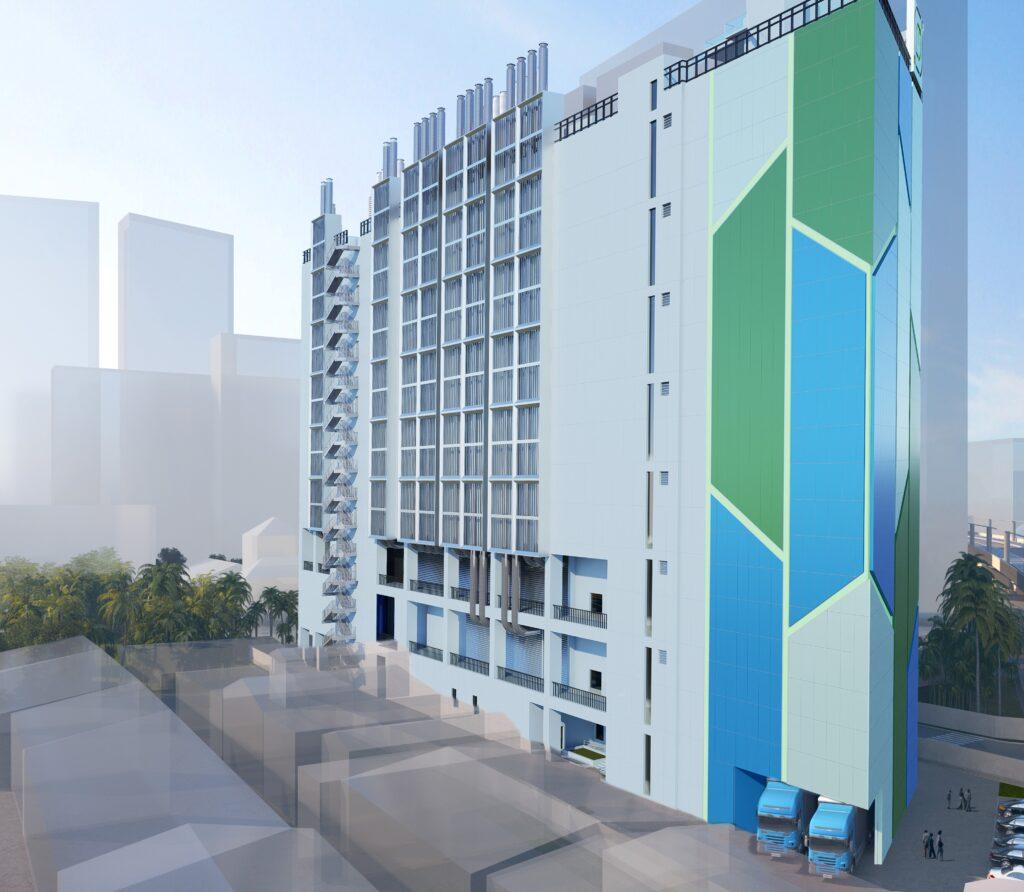
The TH1 Bangna Project is a green data center developed by China State Construction Engineering (Thailand) with a gross floor area of approximately 17,000 m². EGS-plan is actively serving as the TREES Consultant, Commissioning Authority, and Construction Supervisor for the project, which began in February 2026. Pursuing TREES New Construction Version 2.0 Gold certification, the facility features a thermally efficient building envelope, high-efficiency cooling systems, and utilizes locally sourced, recycled-content materials to reduce greenhouse gas emissions. Furthermore, rigorous environmental protection and construction waste management practices are being implemented on-site to minimize community impact and maximize recycling.
Why Choose EGS-plan for TREES Certification in Thailand?
Thailand has several firms offering TREES consulting. Here is what makes EGS-plan a different kind of TREES green building consultant:
Commissioning and certification in one team. Many TREES certification consultants outsource commissioning to a separate firm. At EGS-plan, our commissioning engineers and TREES consultants sit in the same office, work on the same timeline, and share the same documentation, streamlining processes and alignment on credit evidence and site verification.
Multi-certification capability. We consult across TREES, LEED, DGNB, EDGE, and WELL. If your project needs both TREES, for the FAR bonus or government compliance, and an international certification, for multinational tenants or ESG reporting, we manage both under one team.
German engineering heritage, Thai market experience. EGS-plan (Bangkok) Co., Ltd. was founded in 2015 as a subsidiary of EGS-plan GmbH in Germany. Our Thai-German management team brings more than a decade of experience in the Thai market and over 150 completed projects. We combine international engineering standards with practical knowledge of Thai construction practices, local materials availability, and TGBI’s review expectations.
Full-time in-house team. Every EGS-plan project is staffed by full-time architects and engineers. We do not rely on freelancers or subcontract technical work, and this consistency makes a difference in the full lifecycle of a TREES project, from design-stage documentation through construction monitoring and commissioning.
A practical approach to green building. Our approach starts with the strategies that deliver the best return; the ones that reduce energy and water costs while earning the most points, and builds toward your target certification level from there.
Get started on your ESG goals with a TREES certification. Contact EGS-plan for a consultation session.
Frequently Asked Questions About TREES Certification Consultant in Thailand
A: TREES (Thai’s Rating of Energy and Environmental Sustainability) is Thailand’s national green building rating system, developed and administered by the Thai Green Building Institute (TGBI). It was launched in 2009 and formally established in 2012. The system was adapted from the LEED framework but recalibrated for Thailand’s tropical climate, local construction practices, materials availability, and regulatory environment.
TREES evaluates buildings across eight categories: Building Management, Site and Landscape, Water Conservation, Energy and Atmosphere, Materials and Resources, Indoor Environmental Quality, Environmental Protection, and Green Innovation, using a 100-point scale with four certification levels: Certified, Silver, Gold, and Platinum.
A: There are four TREES certification levels: Certified (minimum point threshold), Silver (mid-range), Gold (high performance), and Platinum (highest tier). In Bangkok, each level also corresponds to a FAR bonus: 5% for Certified, 10% for Silver, 15% for Gold, and 20% for Platinum. TREES Silver is the minimum requirement for Thai government projects.
A: TREES-NC (New Construction and Major Renovation) is for new buildings or major renovation projects where the design team controls the full scope of work. TREES-CS (Core and Shell) is for projects where the developer delivers the base structure and core building systems but not the full interior fit-out, typically used for speculative office or mixed-use buildings. TREES-EB (Existing Building: Operation and Maintenance) is for buildings that are already operational, focusing on ongoing performance rather than design. There is also TREES PRE-NC, a pre-certification pathway that validates design direction before construction begins.
A: TREES certification is mandatory for Thai government projects, which must achieve at least TREES Silver. For private sector projects, TREES certification is voluntary but incentivized. For instance, the Bangkok Metropolitan Authority grants a FAR bonus of 5–20% (depending on certification level) for TREES-certified buildings under the Bangkok Comprehensive Plan. This FAR incentive makes TREES building certification particularly attractive for large commercial and mixed-use developments in Bangkok, where additional buildable area directly translates into revenue.
A: Both systems use a point-based approach with four certification tiers and evaluate similar categories (energy, water, materials, indoor quality, site sustainability). The key differences: TREES is administered by TGBI in Thailand (with Thai-language processes), while LEED is administered by USGBC/GBCI internationally.
TREES criteria are calibrated to the Thai climate, energy codes, and materials. Its energy baselines reference Thai building energy regulations, and its materials credits recognize Thai Green Labels and Carbon Labels. LEED carries broader international recognition, which matters for projects targeting multinational tenants or global investors. Some developers in Thailand pursue both certifications, TREES for the FAR bonus and local compliance, LEED for international credibility.
A: The TREES-NC/CS process involves three main phases: project registration with TGBI, design-stage submission when drawings are complete, and construction-stage submission when construction is finished. Projects can also submit all documentation at once after construction is complete. TGBI’s third-party assessors review the documentation and make the certification decision independently. Projects targeting pre-certification can use the PRE-NC pathway to validate their design direction before construction begins. EGS-plan manages the entire process, from registration and credit strategy through both submission phases and review management.
A: The timeline depends on your project size, design complexity, and submission readiness. TREES documentation is submitted in two phases (design and construction), so the overall process runs in parallel with your project’s design and construction schedule. Review timelines are managed by TGBI’s assessment team. The most effective way to avoid delays is to engage a TREES certification consultant like EGS-plan early in the design process, so credit strategies are integrated into design decisions from the start. Documentation must be submitted to TGBI within 90 days of the completion of the final performance period.
A: Yes. Commissioning is a prerequisite for every TREES-NC and TREES-CS project under the TREES Building Management (BM) category. The commissioning process verifies that building systems are designed and installed as specified and that they operate according to the project’s sustainability targets. As a TREES certification consultant, EGS-plan also provides commissioning services in-house, which means the same team handles both the documentation and the technical verification.
A: Yes. EGS-plan manages multi-standard certification projects regularly. Some clients pursue both TREES for the Bangkok FAR bonus or government compliance, and LEED for international recognition with multinational tenants or global investors. Because we consult across both systems (as well as DGNB, EDGE, and WELL), we can identify overlapping documentation requirements, coordinate credit strategies across rating systems, and manage the combined process efficiently under one team. This is more effective than hiring separate consultants for each certification.