LEED (Leadership in Energy and Environmental Design) is the most widely used green building rating system in the world, with certified projects in more than 185 countries. It covers everything from site selection and energy performance to indoor air quality and material sourcing. And in a market where multinational tenants, institutional investors, and ESG-focused lenders increasingly expect third-party sustainability credentials, a LEED certification carries real commercial weight.
EGS-plan has been working as a LEED consultant in Thailand since 2015, supporting projects from initial feasibility through final GBCI review.
What Is LEED Certification?
LEED is a voluntary green building rating system developed and administered by the US Green Building Council (USGBC), with certification reviews handled by the Green Business Certification Inc. (GBCI).
LEED evaluates a building’s performance across several categories: integrative process, location and transportation, sustainable sites, water efficiency, energy and atmosphere, materials and resources, indoor environmental quality, and innovation. Projects earn points in each category based on the strategies they implement. The total points determine the certification level — Certified, Silver, Gold, or Platinum.
What makes a LEED certification different from many regional rating systems is its global reach and the rigor of its third-party review process. Every credit claim goes through GBCI, an independent body that reviews documentation, requests clarifications, and issues the final certification decision. That independence is what gives the label its credibility with international investors, corporate tenants, and green finance providers.
LEED certification applies to virtually every building type, including new constructions, major renovations, existing buildings in operation, and tenant interiors. There are dedicated pathways for offices, hospitals, warehouses, data centers, hotels, schools, and residential buildings.
LEED v5 — The Most Significant Update
LEED v5 is the most significant update to the rating system in over a decade. Released by USGBC in April 2025, it makes the shift from energy efficiency toward comprehensive decarbonization, climate resilience, and social equity.
Here’s what LEED certification project teams in Thailand need to know:
Decarbonization is now the core metric. Roughly 50% of available LEED v5 credits are tied to carbon reduction and connect back to one of three impact areas: decarbonization, quality of life, or ecological conservation and restoration.
New prerequisites apply to all projects. LEED v5 introduces mandatory Climate Resilience Assessment, Social Impact Assessment, and Occupant Needs Assessment prerequisites. These didn’t exist in v4.1 and require early-stage planning.
Platinum is a near-zero-carbon benchmark. Beyond the 80-point threshold, LEED v5 Platinum now requires minimum achievement in four performance areas: electrification, enhanced energy efficiency, 100% renewable energy, and a 20% reduction in embodied carbon.
The v4 versus v5 timeline matters. LEED v4.1 registration for commercial BD+C, ID+C, and O+M has been extended through June 30, 2027. After that date, LEED v5 will be the only version available for new registrations. Projects already registered under v4 or v4.1 can continue to certify through June 2032.
Development cycle transition. USGBC has committed to a five-year development cycle. The next rating system update is expected in 2030, giving the market more predictability than previous version transitions.
As a LEED v5 certification consultant, EGS-plan is actively preparing for the transition. We advise clients on whether to register under v4.1 now or move to v5. The right answer depends on your project’s timeline, design stage, and sustainability ambitions.
LEED Certification Levels
LEED uses a 110-point scale. The more points your project earns, the higher the certification level:
 LEED Certified (40–49 Points)
A building at this tier has met all LEED certification prerequisites and earned enough credits to demonstrate meaningful performance improvements over a conventional baseline. It is a solid starting point for projects entering green building certification for the first time.
 LEED Silver (50–59 Points)
A step above Certified, Silver reflects stronger performance across multiple credit categories. Projects at this level typically implement more impactful water-efficiency and energy-efficiency strategies than the minimum requirements.
 LEED Gold (60–79 Points)
LEED Gold is the most common target for commercial projects in Thailand. The 60-point threshold is achievable for well-designed office towers, mixed-use developments, hospitals, and industrial buildings.
 LEED Platinum (80+ Points)
LEED Platinum signals that a building is among the top performers globally. Under LEED v5, Platinum now carries additional mandatory requirements beyond the 80-point threshold. Projects must achieve minimum credits in electrification, energy efficiency, renewable energy (100% renewable), and embodied carbon reduction (20% minimum). This makes Platinum a substantially more rigorous benchmark than in previous LEED versions.
LEED Rating Systems — Which Applies to Your Project?
LEED is made up of a family of rating systems, each designed for a different project type and phase. Choosing the right pathway is one of the first decisions a LEED green building consultant helps you make to prevent wasting effort on credits that do not apply.
Here are the main LEED certification rating systems relevant to projects in Thailand:
| LEED Rating System | Applies To | When to Use |
|---|---|---|
| BD+C: Building Design and Construction | New buildings or major renovations (offices, mixed-use, hospitals, factories) | The default path for most new projects. At least 60% of gross floor area must be complete at certification. |
| BD+C: Core and Shell | New buildings where the developer delivers the base structure but not the tenant fit-out | Common for speculative office towers and mixed-use developments in Bangkok. Use when more than 40% of floor area is incomplete at certification. |
| BD+C: Hospitality | Hotels, resorts, and hospitality buildings | Dedicated credit adaptations for guest rooms, amenities, and hospitality operations. |
| BD+C: Warehouses and Distribution Centers | Factories, logistics centers, and industrial buildings | Addresses the unique energy and material profiles of industrial facilities. |
| ID+C: Interior Design and Construction | Tenant fit-outs within an existing building | For tenants renovating their own space. |
| O+M: Building Operations and Maintenance of Existing Buildings | Buildings that have been fully operational for at least one year | Focuses on operational performance rather than design. |
As an LEED green building consultant, EGS-plan helps you navigate the USGBC’s rating system selection guidance and choose the pathway that maximizes your credits while matching your actual scope of work.
Why Pursue LEED Certification?
A LEED certificate is considered a worthwhile investment in Thailand’s highly competitive commercial real estate market because the strategies required to earn LEED certification deliver measurable, long-term financial and strategic returns.
Increase Asset Value and Marketability
LEED-certified buildings consistently command higher occupancy rates and rental premiums compared to non-certified peers. In Bangkok, international corporations with global sustainability mandates actively seek LEED-certified office space for their regional headquarters. A LEED Gold or Platinum label tells prospective tenants, buyers, and joint venture partners that the building meets an independently verified international standard.
Reduce Long-Term Operating Costs
Every LEED project must meet minimum energy performance requirements, and projects targeting Gold or Platinum go well beyond the baseline. In Thailand’s climate, where cooling loads account for most energy consumption, the efficiency measures required for LEED certification translate directly into lower electricity bills. The same applies to water, a category where LEED’s baseline reduction requirements can cut municipal water use by 20–40% compared to conventional buildings.
Improve Occupant Health and Comfort
LEED v5 places even greater emphasis on indoor environmental quality than previous versions. Credits covering indoor air quality, thermal comfort, daylight access, acoustic performance, and occupant satisfaction are core to the rating system. For office buildings and hospitals, where employee productivity and patient outcomes are directly tied to indoor conditions, these credits deliver real operational value.
Access Green Financing
LEED certification supports eligibility for green financing instruments, including green bonds, sustainability-linked loans, and ESG-aligned investment funds. The certification is recognized by GRESB (Global Real Estate Sustainability Benchmark), a framework aligned with the ICMA Green Bond Principles, and by IFC-linked financial institutions. For developers and property funds operating in Thailand and Southeast Asia, a LEED certificate can open the door to preferential loan terms and broader pools of capital specifically earmarked for certified sustainable assets.
Our LEED Certification Services
EGS-plan provides end-to-end LEED consulting, from your first feasibility conversation through to the final GBCI review and beyond. Our full-time team of architects and engineers handles every stage in-house, which means your LEED certification consultant and your commissioning authority are working from the same office, on the same timeline.
Feasibility Assessment and Goal Setting
As a LEED certification consultant in Thailand, we start by evaluating your site, building type, design program, and ownership targets. Using the LEED scorecard, we map out a realistic credit strategy and identify which credits are achievable within your budget, which ones require design changes, and which ones are not worth pursuing. You get a clear picture of what certification level is realistic before your design team invests significant effort.
Rating System and Version Selection
Each rating system has different prerequisites, credit structures, and documentation requirements. As an LEED consultant, we help you choose the right LEED pathway. We also advise on version selection: whether to register under LEED v4.1 (registration extended through June 30, 2027) or move to LEED v5, which is now open for registration and will become the only option for new commercial projects after July 2027. Our team stays current on USGBC’s evolving timelines and can guide your decision based on your project schedule and certification goals.
Credit Strategy and LEED Scorecard
Once the pathway and version are set, your EGS-plan LEED consultant builds a living scorecard, which is a working document that tracks every credit, assigns responsibilities across the project team, and flags dependencies. We identify the highest-value credits for your specific project and budget, so design effort goes where it has the greatest impact on your total score.
Design Integration and Energy Modeling
Our engineers work directly with your design team to embed LEED requirements into the design process from the start, such as envelope performance, HVAC selection, lighting design, water fixtures, and material specifications. We also run energy simulations using approved software to model your building’s performance and optimize your credit points.
Documentation Management and Submission
LEED certification requires detailed documentation for every credit claimed, including drawings, calculations, product data, commissioning reports, and more. Our team organizes, reviews, and submits all credit evidence to GBCI through the LEED Online platform (or Arc for LEED v5 certification consultant projects). We also manage the review comments and clarification requests in the preliminary and final review stages.
Building Commissioning Support
Fundamental Commissioning and Verification (EAp1) is a LEED prerequisite. Enhanced Commissioning (EAc1) earns additional credits and is typically required for Gold and Platinum targets. EGS-plan can provide both services because our commissioning engineers and LEED consultants sit on the same team, which streamlines certification documentation and commissioning processes. We also handle LEED Fundamental Commissioning, Enhanced Commissioning, and Monitoring-Based Commissioning for projects that want the full credit package.
EGS-plan’s LEED Consultant Projects
EGS-plan has supported LEED certification across many building types. Here are some of our completed, LEED Gold-certified projects.
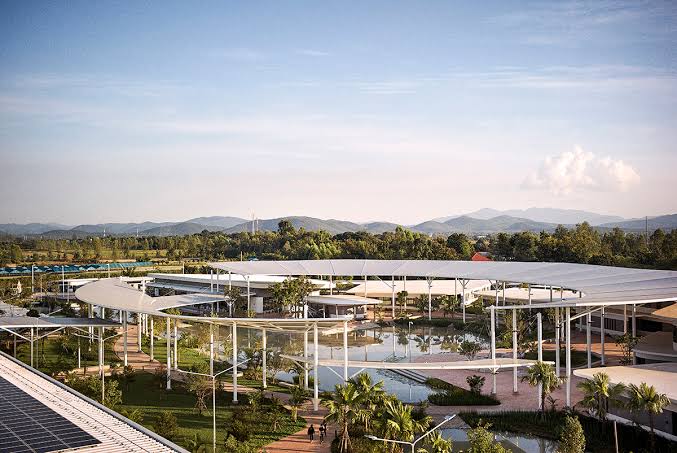
Pandora Factory, Lamphun
LEED BD+C: New Construction — Gold
Pandora’s PPT2 jewelry manufacturing facility in Lamphun, northern Thailand, achieved LEED Gold certification. EGS-plan provided commissioning and sustainability consulting services for this industrial project, demonstrating that LEED Gold is fully achievable for factory buildings in Thailand.
Green Worx, Vienna, Austria
LEED Core & Shell V3.0 — Platinum
Green Worx is a four-building complex featuring retail spaces on the ground floor and office spaces on the upper floors and is the first Platinum-certified building in Austria. EGS-plan was contracted for LEED certification and coordinated the design team, contractor, and client. The building’s sustainable highlights include captured rainwater utilization, two small rooftop wind power plants, concrete core cooling and heating, adiabatic cooling of supply air, and advanced heat recovery systems.
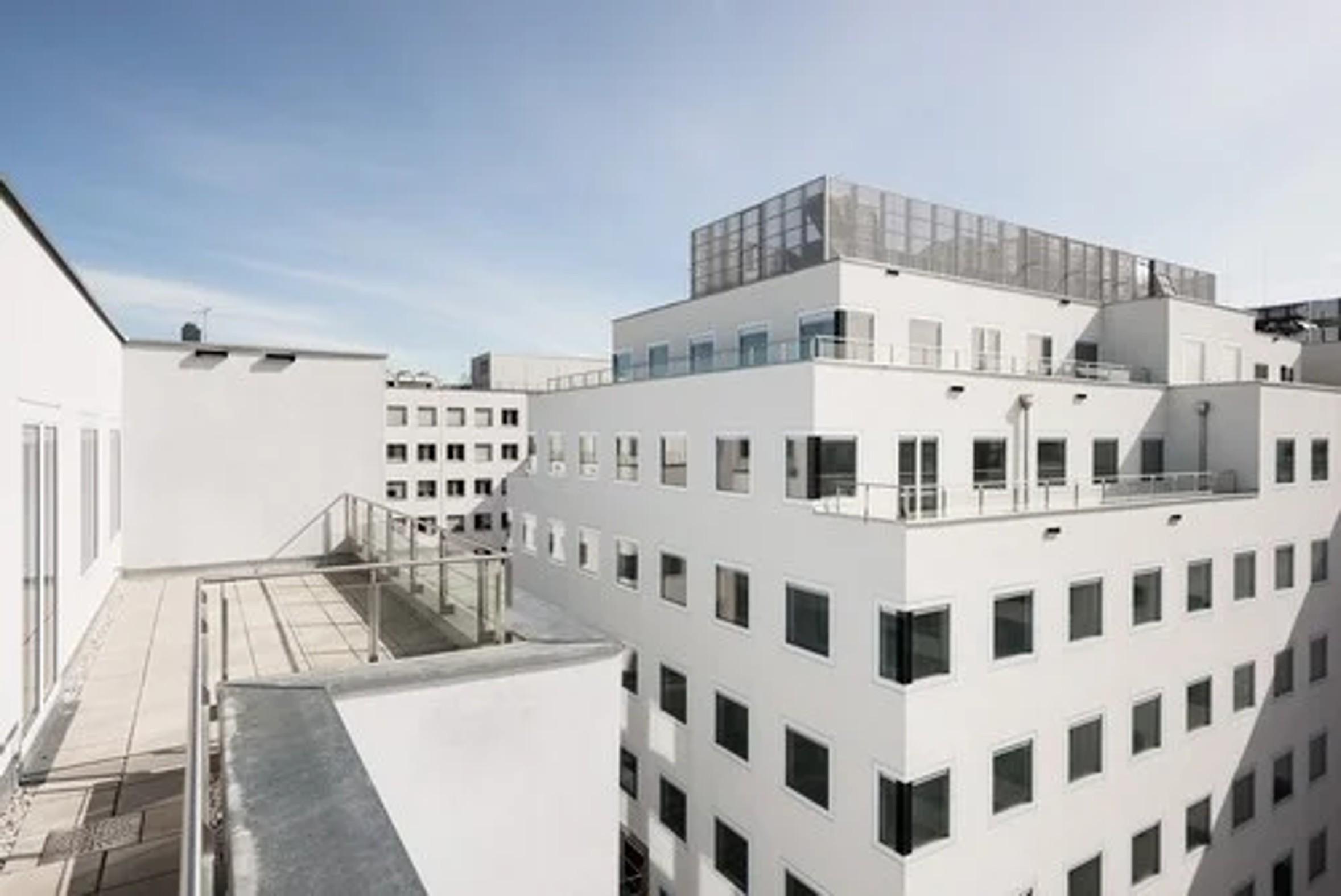
Am Hauptbahnhof 18, Frankfurt, Germany
LEED Core & Shell — Gold
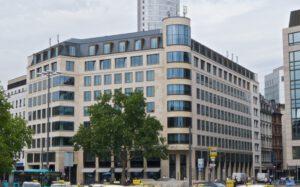
Located directly opposite Frankfurt’s main station, this project comprises the refurbishment of a 1970s office building into a first-class real estate property. EGS-plan served as the LEED management and consultancy lead, coordinating the design team, contractor, and client. The building’s green design features boxed-type windows with integrated shading for noise-reduced natural ventilation, capillary tubes integrated into the existing plaster ceiling for radiation cooling, and energy-efficient floor lamps equipped with motion and daylight sensors.
Alte Post, Hamburg, Germany
LEED Core & Shell V3.0 — Gold
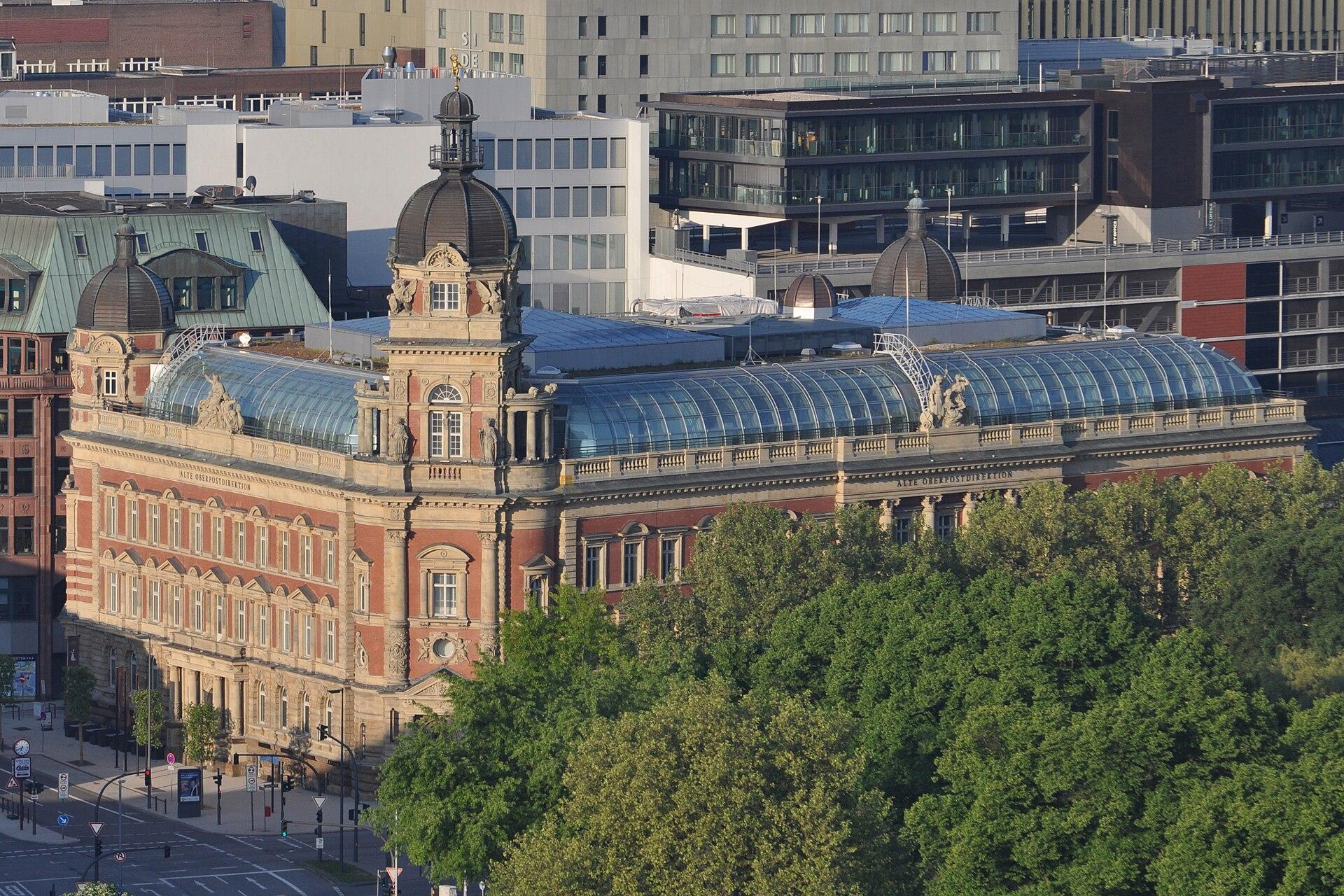
The Alte Post project, also known as “Stephanspalais Ostbau,” is a historical monument originally built in 1883. The project’s main objective was to upgrade the historical building to meet ambitious sustainability targets while retaining its original character and brickwork facade. EGS-plan provided LEED certification consulting and coordinated the project stakeholders. The building’s sustainability highlights include a reversible geothermal heat pump with free cooling, energy-efficient lighting with sensors, and the innovative use of the sprinkler tank as a thermal storage unit that charges at night to handle daytime peak cooling loads
Why Choose EGS-plan as Your LEED Consultant?
Thailand has several firms offering LEED consulting services. Here is what makes EGS-plan a different kind of LEED green building consultant:
A track record across every building type. Our LEED certification portfolio in Thailand includes offices (Green Worx and Am Hauptbahnhof 18), a factory (Pandora Lamphun), and a medical center (Alte Post).
Commissioning and certification under one roof. LEED requires building commissioning, and for Gold and Platinum, it requires Enhanced Commissioning. At EGS-plan, our commissioning engineers and LEED consultants work from the same office. That means fewer coordination issues, faster documentation, and a commissioning process built around LEED credit requirements from the start.
German engineering heritage, local expertise. EGS-plan (Bangkok) Co., Ltd. was founded in 2015 as a subsidiary of EGS-plan GmbH in Germany. Our Thai-German management team brings more than 10 years of experience in the Thai market and over 150 completed projects across Thailand, Southeast Asia, and internationally. We combine international engineering rigor with practical knowledge of Thai construction practices, local codes, and regional climate conditions.
Multi-certification capability. We hold consulting credentials across LEED, DGNB, TREES, EDGE, and WELL. If you are weighing LEED against another system, or pursuing dual certification, we can advise you on which combination delivers the most value for your specific building type and market positioning.
Green building certification with financial sense. Our approach starts with strategies that deliver the best return on energy and water savings and builds from there toward your target certification level.
Learn more about which services best fit your needs and requirements. Contact us to schedule a free LEED consultation.
Frequently Asked Questions About LEED Certification Consultant Service
A: LEED (Leadership in Energy and Environmental Design) is the world’s most widely used green building rating system. It was developed by the US Green Building Council (USGBC) and evaluates buildings across categories, including energy, water, materials, indoor environmental quality, site sustainability, and innovation. Certification reviews are conducted by GBCI (Green Business Certification Inc.), an independent third party that reviews all documentation and issues the final certification decision. LEED certification is recognized in more than 185 countries.
A: There are four LEED certification levels, based on a 110-point scale: Certified (40–49 points), Silver (50–59 points), Gold (60–79 points), and Platinum (80+ points). Under LEED v5, Platinum carries additional mandatory performance requirements beyond the point threshold, including electrification, 100% renewable energy, and a 20% reduction in embodied carbon. LEED Gold is the most common target for commercial projects in Thailand.
A: It depends on your building type and project phase. New construction and major renovations use LEED BD+C (Building Design and Construction), with adaptations for offices, hospitals, hotels, warehouses, and core-and-shell projects. Tenant interior fit-outs use LEED ID+C (Interior Design and Construction). Existing buildings focused on operational improvement use LEED O+M (Building Operations and Maintenance). The rating system determines which credits are available and how prerequisites are structured. As an LEED green building consultant, EGS-plan can help you select the right pathway during our feasibility assessment.
A: LEED v5 is the latest version of the LEED rating system, released by USGBC in April 2025. It places significantly more weight on decarbonization (roughly 50% of credits), introduces new prerequisites for climate resilience and social equity, and raises the bar for Platinum certification. Projects can still register under LEED v4.1 through June 30, 2027, but after that date, LEED v5 will be the only option for new commercial registrations. The right version depends on your project timeline and goals. If your design is already advanced and you are ready to register soon, v4.1 may be the simpler path. If you are in the early design stages and want to align with the latest global sustainability benchmarks, v5 is worth considering. As a LEED v5 certification consultant, EGS-plan advises on version selection as part of our feasibility assessment.
A: LEED certification costs include three main components: USGBC/GBCI registration and certification review fees (which vary by project size, rating system, and USGBC membership status), energy modeling and simulation costs, and LEED consultant professional fees. The GBCI registration fee is a flat fee paid at registration, and the certification review fee is calculated based on your project’s gross floor area. Total project costs vary widely depending on complexity, building type, and target certification level. Contact EGS-plan for a project-specific estimate.
A: The timeline depends on your project phase, design complexity, and documentation readiness. GBCI’s preliminary review typically takes 20–25 business days after submission, followed by a final review of a similar duration. The overall process, from LEED registration to receiving your certificate, can range from several months to two or more years, depending on construction timelines and how quickly documentation is compiled. Engaging a LEED consultant early in the design process is the single most effective way to avoid delays, because it allows LEED credit strategies to be integrated into design decisions rather than retrofitted after the fact.
A: Yes. Fundamental Commissioning and Verification (EAp1) is a prerequisite for every LEED BD+C project. Enhanced Commissioning (EAc1) is an optional credit that earns additional points and is typically pursued by projects targeting Gold or Platinum. Monitoring-Based Commissioning (EAc2) adds further points for ongoing performance verification. EGS-plan provides all three levels of commissioning in-house, alongside our LEED consulting services. Having both services under one roof eliminates the coordination problems that arise when the commissioning authority and the LEED consultant are separate firms.
A: Yes. The LEED O+M (Building Operations and Maintenance) rating system is specifically designed for existing buildings that have been fully operational and occupied for at least one year. It focuses on operational performance rather than design, covering energy efficiency, water use, waste management, indoor air quality, and ongoing maintenance practices.
A: LEED is an international rating system developed by the USGBC and recognized in over 185 countries. TREES (Thai’s Rating of Energy and Environmental Sustainability) is Thailand’s local green building standard, developed by the Thai Green Building Institute (TGBI) and modeled on LEED’s structure. Both systems use a point-based approach with four certification tiers (Certified, Silver, Gold, Platinum) and evaluate similar categories, such as energy, water, materials, indoor environmental quality, and site sustainability. The key differences: LEED carries international recognition valued by multinational tenants and global investors, while TREES is locally grounded and calibrated to the Thai climate and construction practices. Some projects in Thailand pursue both certifications to cover both international credibility and local relevance. EGS-plan provides consulting services for both LEED and TREES.