Here is how we view the two terms specifically as they relate to buildings:
Sustainability is a broad concept that refers to a building’s overall ability to provide a comfortable, healthy, and productive environment over the long term without negatively impacting the environment. Sustainable buildings are not just about the environment but take into account all three pillars of sustainability: pla... .... » อ่านเพิ่มเติม
Here is how we view the two terms specifically as they relate to buildings:
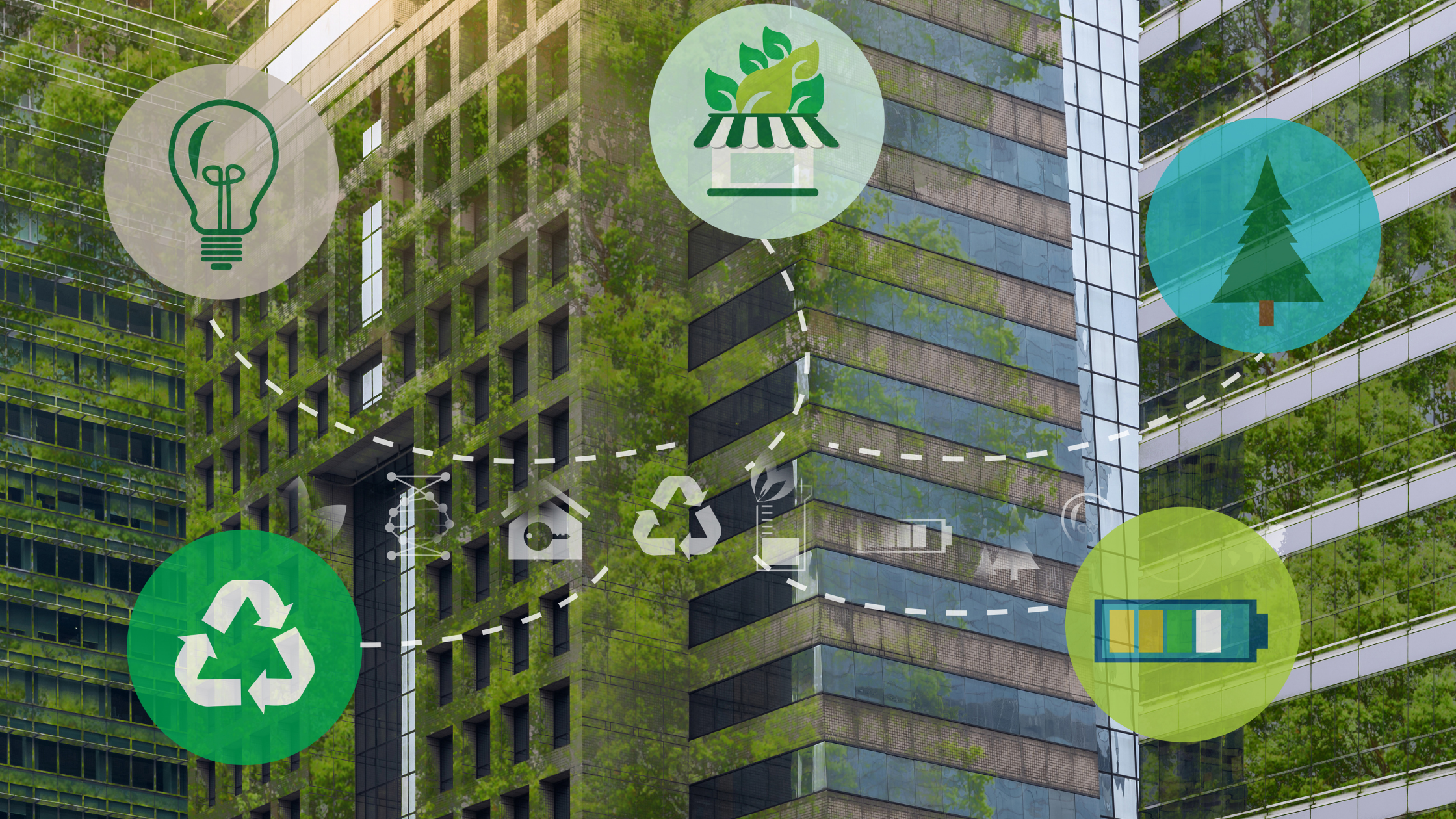
Sustainability is a broad concept that refers to a building’s overall ability to provide a comfortable, healthy, and productive environment over the long term without negatively impacting the environment. Sustainable buildings are not just about the environment but take into account all three pillars of sustainability: planet, people, and profit. How can a building be built and used with consideration for the future of our people, the planet, and the business itself?
To truly be a sustainable building, this ideology must be “baked” in at every stage of a building’s life cycle. For example:
Planning – Are you building on previously undisturbed land?
Design – Sustainable architecture considers, for example, window placement for optimal natural ventilation.
Construction – Are the materials used safe for the environment and occupants? Does the construction process conserve natural resources?
Operation and maintenance – Is energy and water being used efficiently? Are cleaning products safe for occupants?
Demolition – Will solid waste and disposed materials be handled in an environmentally safe manner?
Green, on the other hand, is a concept that is solely focused on the environment and refers to the individual practices and processes that make up the incremental steps toward environmental sustainability. For example, “green initiatives” such as switching to renewable energy sources or reducing your carbon footprint might be implemented in an effort to become more sustainable. LEED and WELL certifications are both green building standards that outline steps buildings can take to become more environmentally friendly.
What should building owners be striving for?
Most buildings have been around for decades, and were built before green and sustainable architecture, design, and other similar aspects became a major point of concern. But that does not mean facilities managers and building owners cannot take action to change their buildings for the better.
Most buildings present plenty of opportunities to go green and take steps toward sustainability. For starters:
Reduce your energy wasteby monitoring CO2 levels (to better regulate ventilation), monitoring your building’s water demand, and switching to LED lighting.
Improve the health of your buildingby doing air quality monitoring regularly.
Reduce your environmental impactby incorporating solar and other renewable energy technologies into your energy system.
There’s huge potential for progress when it comes to lessening buildings’ environmental impact—facility managers and building owners can actively seek out those opportunities to prolong the life and health of their buildings, their occupants, and the planet.
EGS-plan supervises Bachelor and Master Thesis for Thai, German and International architecture and engineering students. We also provide internships for students who would like to learn about the day to day working life in an engineering and consulting company.EGS-plan supervises Bachelor and Master Thesis for Thai, German and International architecture and engineering students. We also provide in... .... » อ่านเพิ่มเติม
EGS-plan supervises Bachelor and Master Thesis for Thai, German and International architecture and engineering students. We also provide internships for students who would like to learn about the day to day working life in an engineering and consulting company.EGS-plan supervises Bachelor and Master Thesis for Thai, German and International architecture and engineering students. We also provide internships for students who would like to learn about the day to day working life in an engineering and consulting company.EGS-plan supervises Bachelor and Master Thesis for Thai, German and International architecture and engineering students. We also provide internships for students who would like to learn about the day to day working life in an engineering and consulting company.EGS-plan supervises Bachelor and Master Thesis for Thai, German and International architecture and engineering students. We also provide internships for students who would like to learn about the day to day working life in an engineering and consulting company.EGS-plan supervises Bachelor and Master Thesis for Thai, German and International architecture and engineering students. We also provide internships for students who would like to learn about the day to day working life in an engineering and consulting company.EGS-plan supervises Bachelor and Master Thesis for Thai, German and International architecture and engineering students. We also provide internships for students who would like to learn about the day to day working life in an engineering and consulting company.
On 30th of October two projects of EGS-plan were awarded by GTCC (German-Thai Chamber of Commerce) for their innovative energy concepts at the residence of the German ambassador in Thailand.
The first project was the Pruksa+ project which is a single-family house with an external shading concept, internal thermal insulation and outstanding airtightness. Fresh air is supplied by decentralized venti... .... » อ่านเพิ่มเติม
On 30th of October two projects of EGS-plan were awarded by GTCC (German-Thai Chamber of Commerce) for their innovative energy concepts at the residence of the German ambassador in Thailand.
The first project was the Pruksa+ project which is a single-family house with an external shading concept, internal thermal insulation and outstanding airtightness. Fresh air is supplied by decentralized ventilation systems with energy recovery. A 5kWp photovoltaic system is combined with an ice storage to store solar energy and use it for air-conditioning in the nighttime.
The second project was the new headquarter of Dhannarak Asset Development, which is a 3511 m2 office building. The windows are shaded by overhang fixed shading and vertical louvres, which are automatically adjusted to the sun’s position. Fresh air is provided by a fresh air handling unit with an enthalpy rotor to reduce ventilation cooling demand by more than 70 %. Cooling energy demand is provided by district cooling and about one-third of the energy demand is covered by solar energy from a 125 kWp PV system.
Both projects were already awarded with the Platinum certificate of the German Sustainable Building Council DGNB. The medals were handed over by GTCC’s Executive Director Dr. Roland Wein and H.E. Ambassador Georg Schmidt.